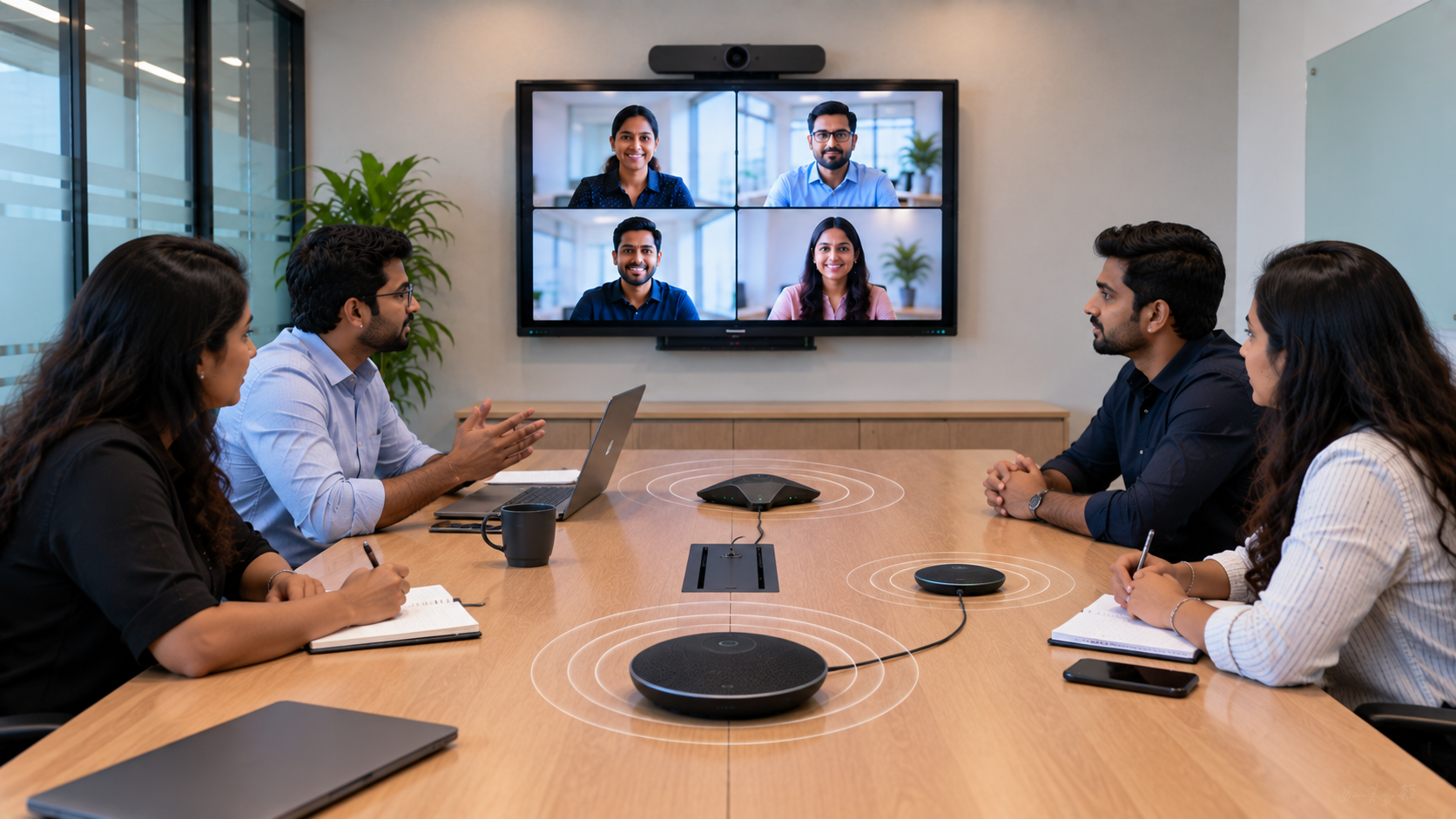
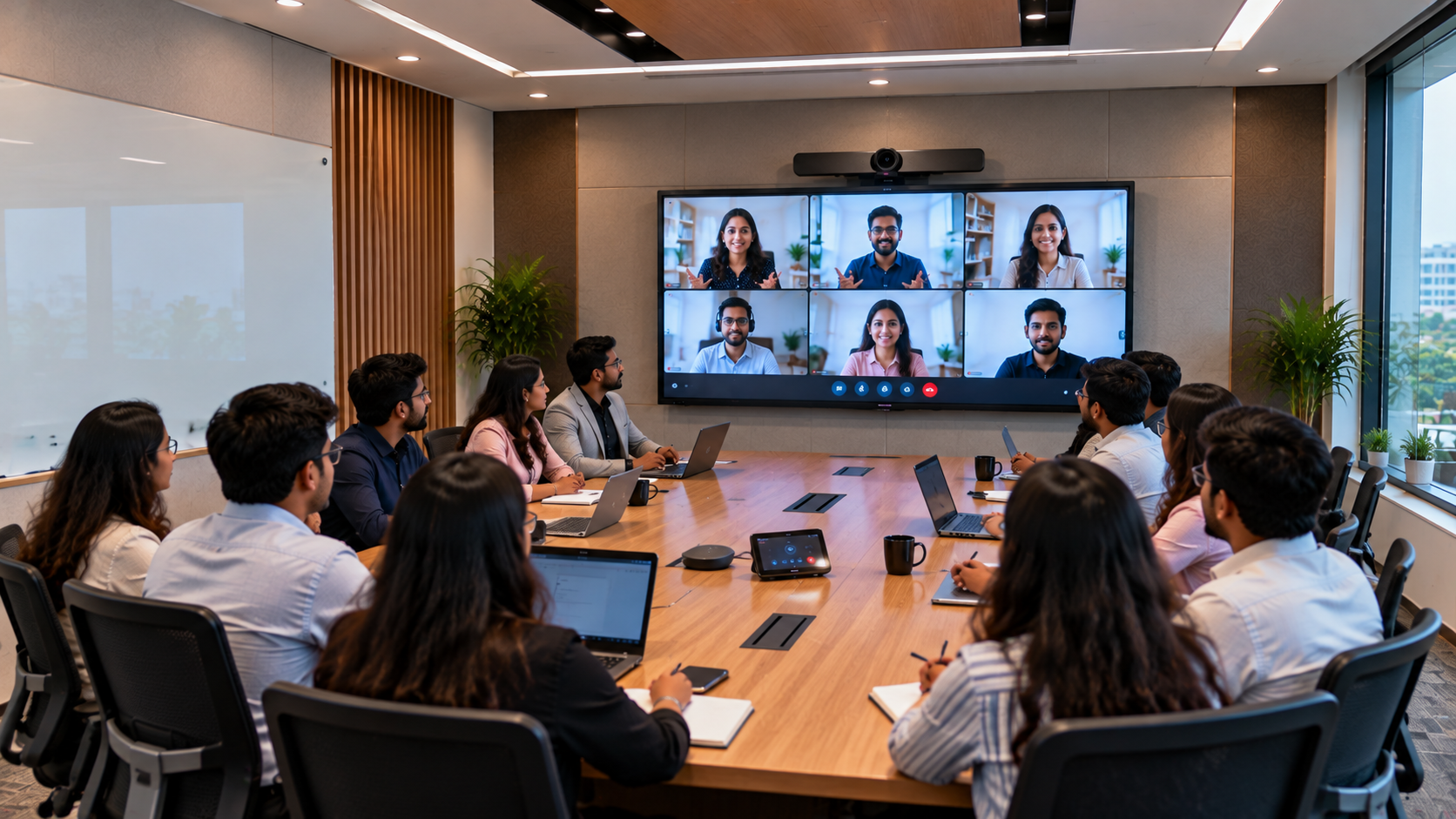
A conference room microphone can make the difference between a smooth, professional meeting and a call filled with “Can you hear me?” moments. Whether you are setting up a corporate boardroom, hybrid classroom, training room, coaching centre, or online teaching studio, choosing the right conference room microphone requires more than looking at price. The three most important factors are microphone pickup range, echo cancellation and overall audio quality. At GoLive eTechnologies, we help businesses and institutions choose the right audio and video conferencing technology based on room size, seating arrangement, usage and budget. Our approach is simple: the right solution + fast deployment + installation + support, so customers experience less technology headache and more confidence that everything will work.
Why Conference Room Microphone Selection Matters
A good conference microphone should capture voices clearly while minimizing background noise, room reflections and unwanted echo.
A microphone that is too small for the room may fail to capture people sitting farther away. On the other hand, choosing an unnecessarily powerful microphone for a small huddle room can increase cost without providing a meaningful benefit.
Before comparing a conference speaker microphone, consider:
Room size and seating capacity
Distance between participants and microphone
Table layout
Background noise
Acoustic treatment
Wired or wireless connectivity
Echo cancellation and noise reduction
Compatibility with your video conferencing platform
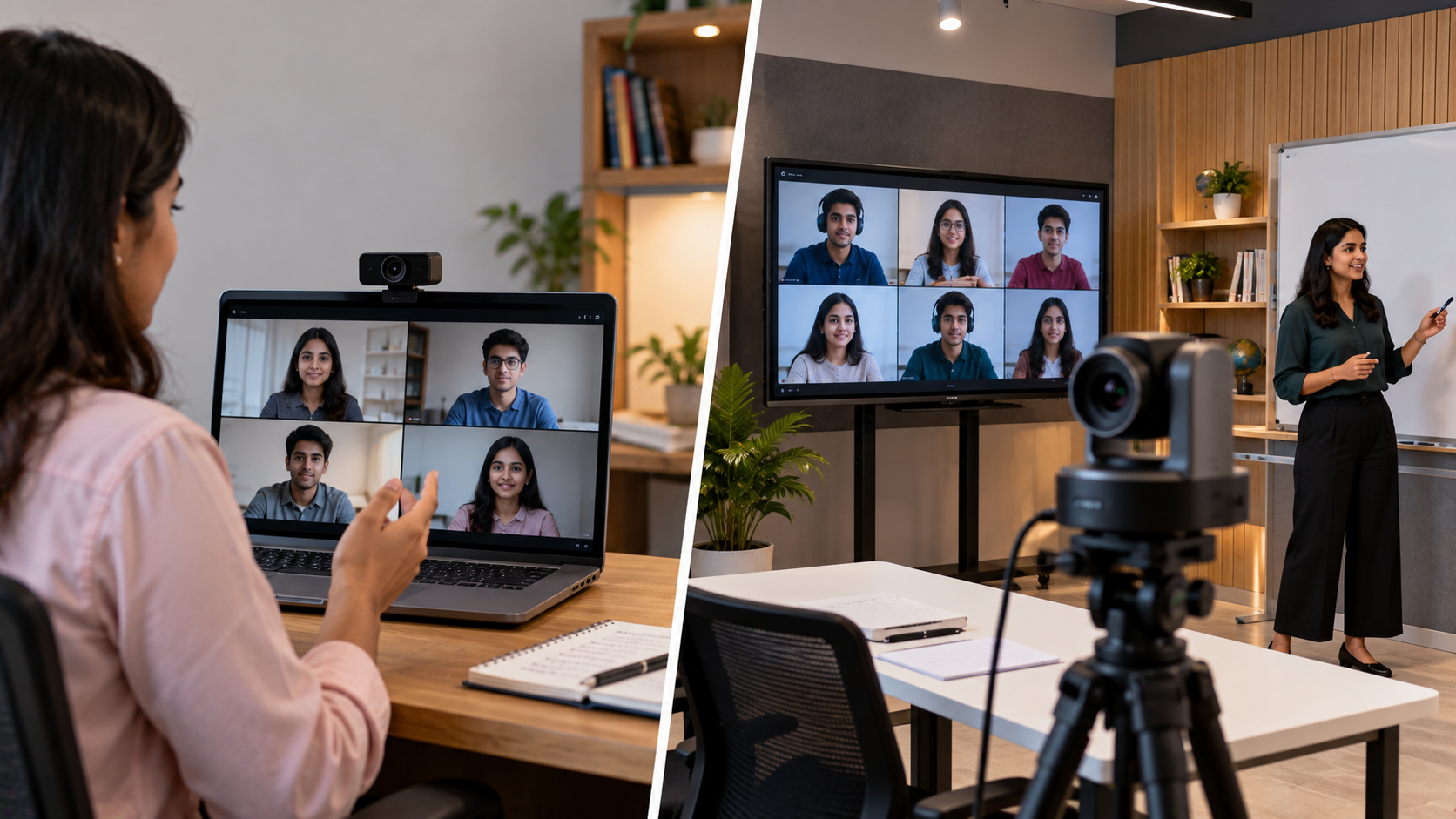
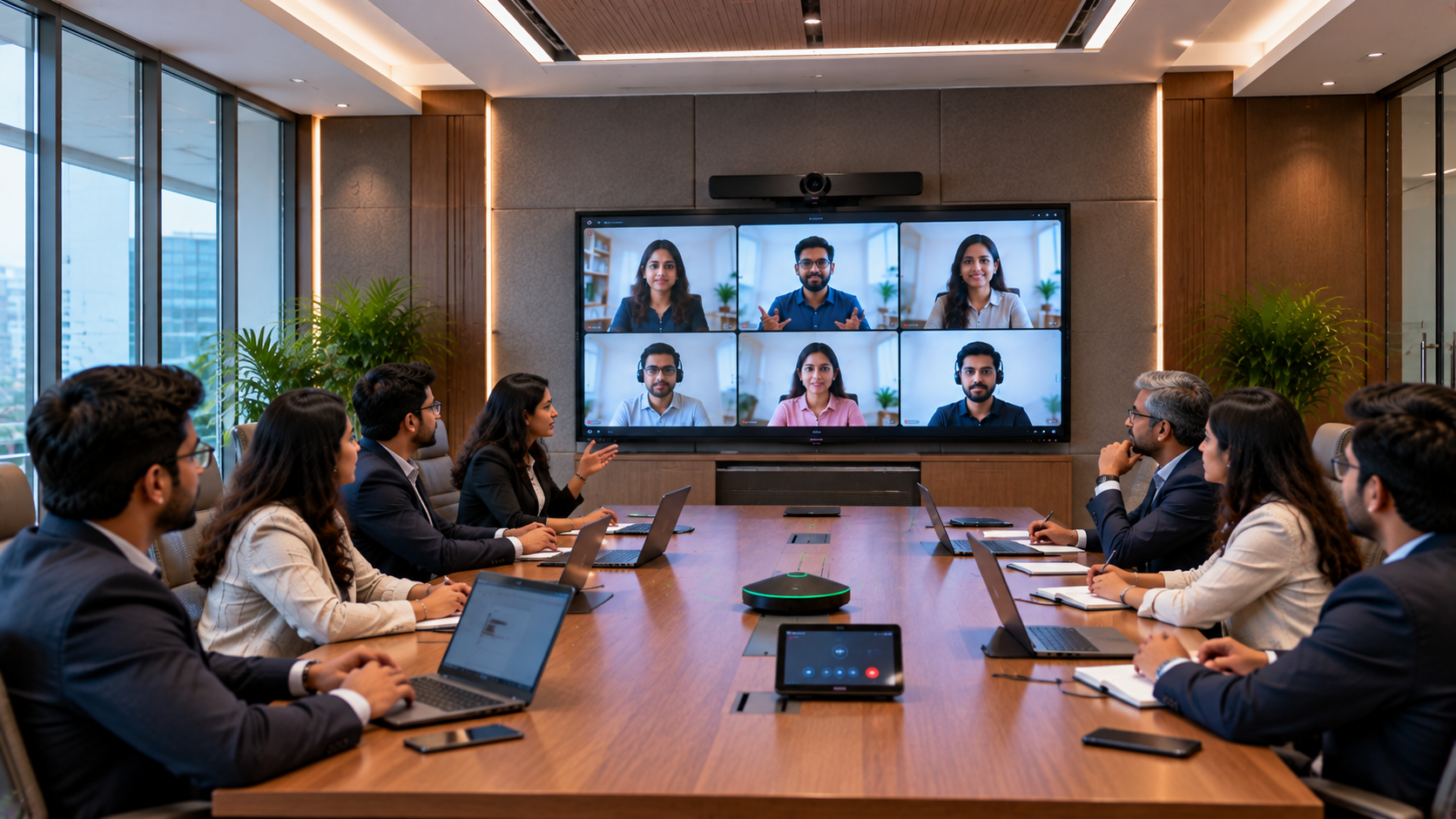
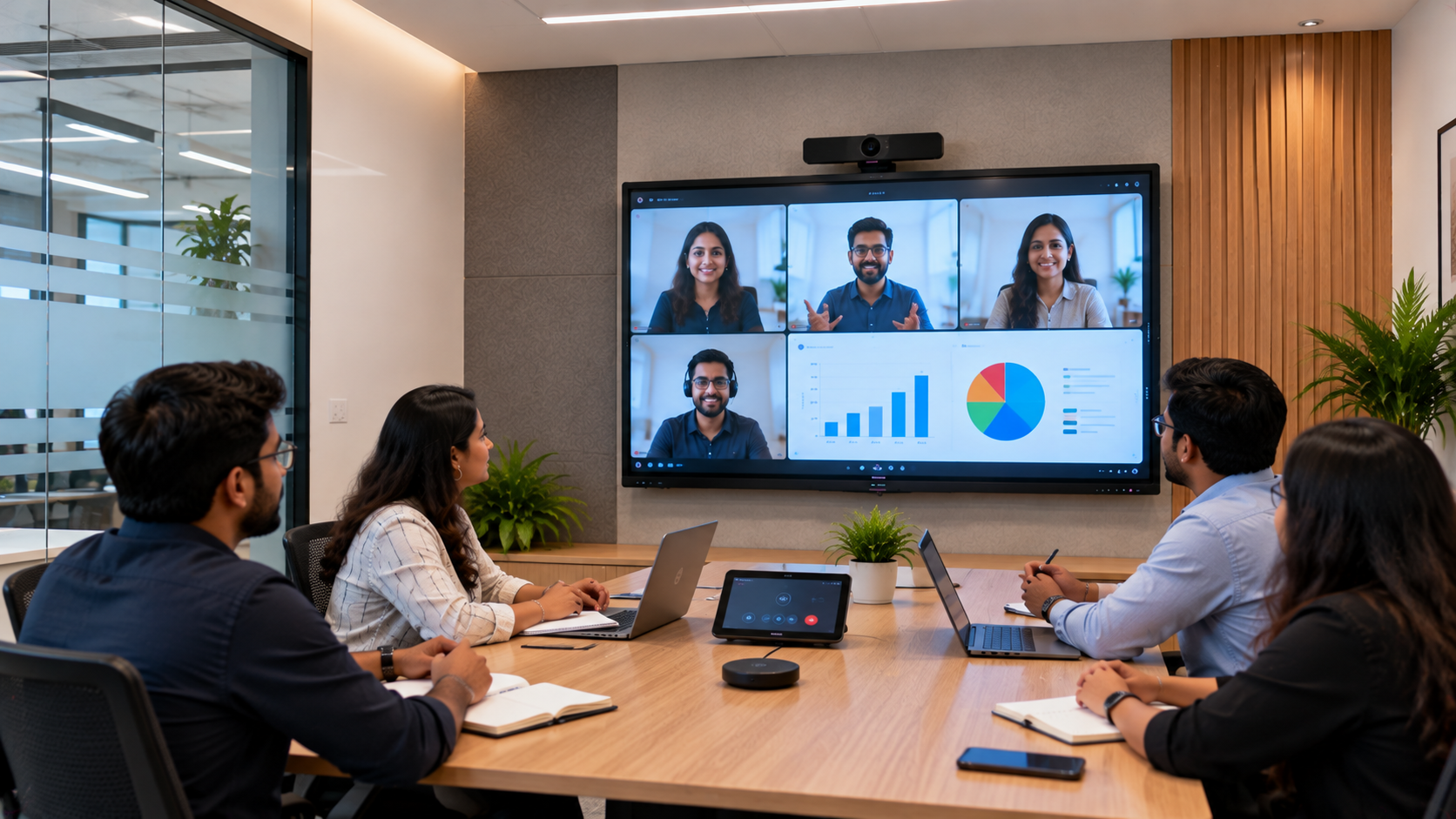
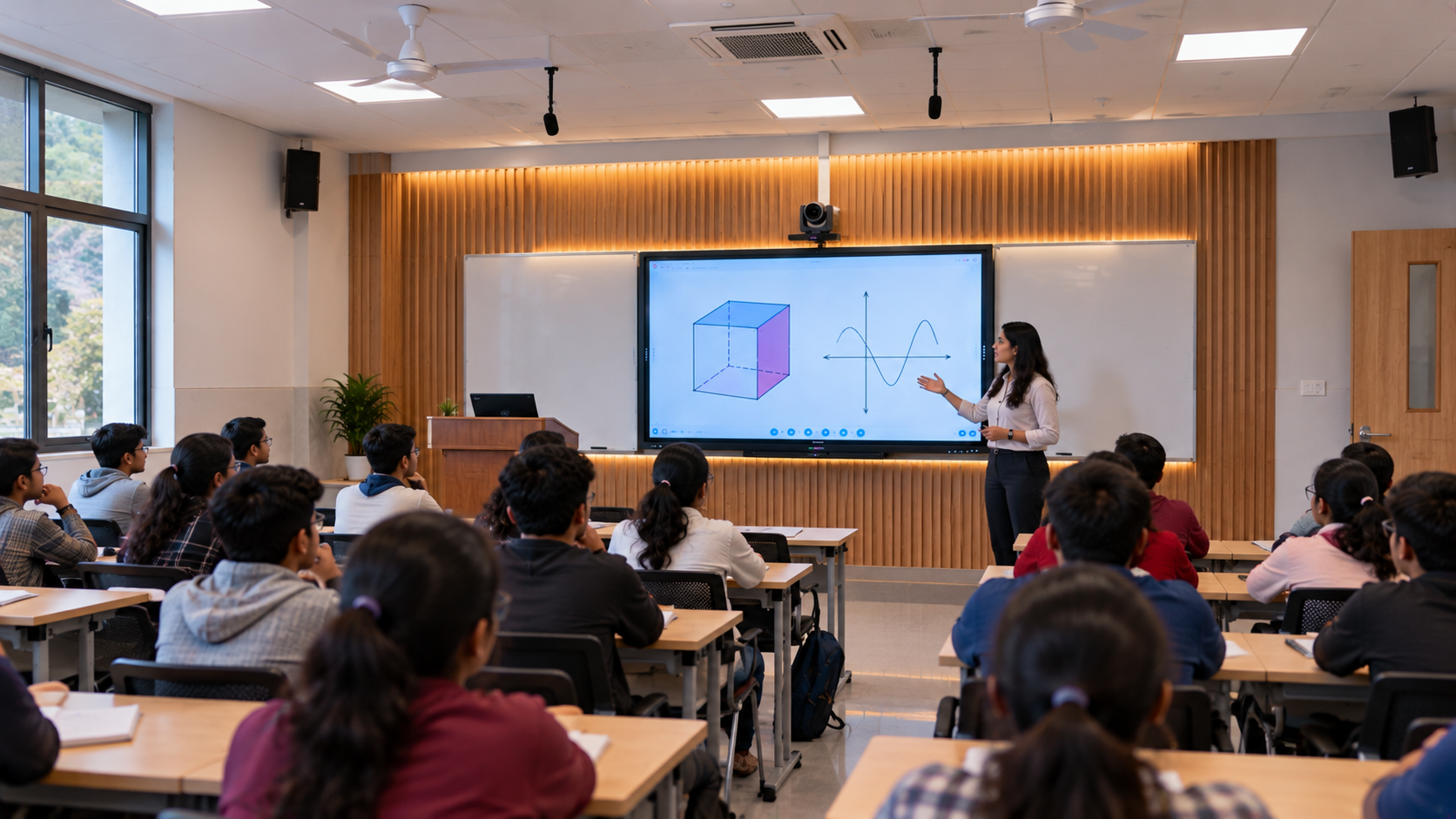
For larger meeting environments, GoLive eTechnologies can also design a complete conference room solution combining a PTZ camera, conference microphone system, interactive display and connectivity accessories. Its small conference room solution, for example, is designed for 6–12 people and can include a 65–75-inch interactive display, PTZ camera and conference microphone system.
1. Check the Microphone Pickup Range
Pickup range indicates how far a microphone can effectively capture speech.
For a small meeting room with 4–6 participants, a compact tabletop microphone may be sufficient. For larger rooms, you may need a microphone array, multiple microphones or a ceiling-mounted solution.
A useful starting point is:
|
Room Type |
Typical Requirement |
Recommended Approach |
|---|---|---|
|
Huddle room |
2–6 people |
Compact USB conference microphone |
|
Small meeting room |
6–12 people |
360° conference microphone/speakerphone |
|
Medium room |
10–20 people |
Larger pickup system or multiple microphones |
|
Boardroom |
15+ people |
Microphone array/multi-mic solution |
|
Hybrid classroom |
Variable |
Conference mic + PTZ camera + display |
Always check the manufacturer's specified pickup area rather than assuming that a microphone advertised as “360°” will perform equally well at every distance.
Example: Philips PSE0400
The Philips PSE0400 USB Portable 360° Smart Meeting Microphone, available through GoLive eTechnologies, uses a four-microphone array and 360° 3D pickup. Its listed effective pickup range is approximately 3–5 metres, making it suitable for small meeting rooms, online classes and remote work setups.
Its current listed price is ₹9,999, subject to change, making it a practical option for organizations looking for a professional conference microphone without moving into a large-room microphone installation.
2. Look for Echo Cancellation
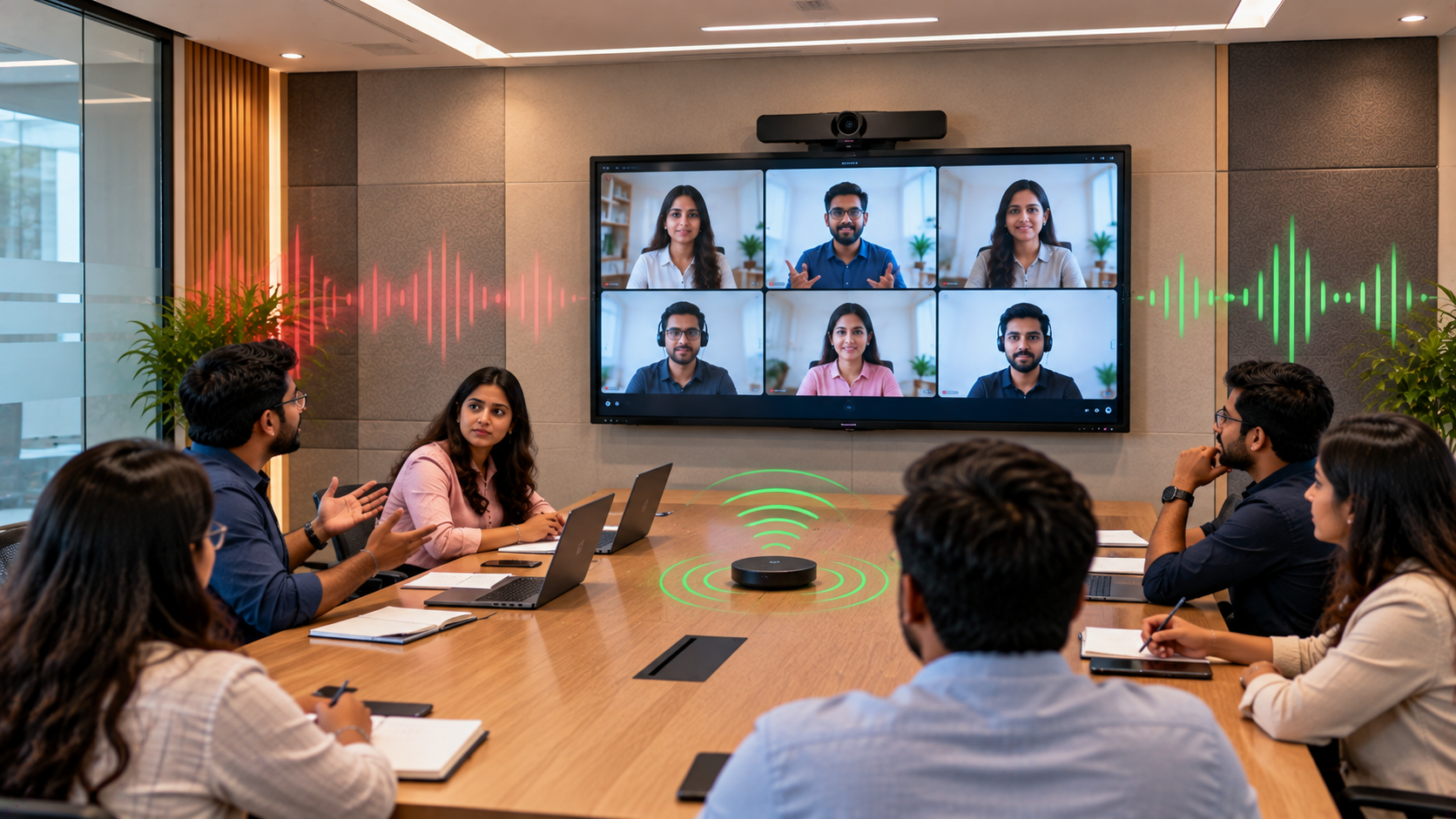
Echo is one of the biggest problems in online meetings.
It can happen when sound from a room's speakers is picked up again by the microphone and transmitted back into the meeting. The result can be a delayed, repetitive or distorted voice.
Look for features such as:
Acoustic echo cancellation
Digital signal processing
Noise reduction
Full-duplex communication
Automatic audio optimization
The Philips PSE0400 available at GoLive eTechnologies combines echo cancellation and intelligent noise reduction with digital audio processing.
For slightly larger meeting environments, the Philips PSE0401 Professional Bluetooth Conference Speakerphone offers 360° pickup through four MEMS microphones and is specified for voice capture within a 6-metre diameter. It also includes intelligent noise reduction, echo elimination and full-duplex communication.
3. Don't Ignore Overall Audio Quality
Pickup range alone does not guarantee good sound.
For professional meetings, focus on:
Speech clarity: Voices should remain understandable without sounding muffled.
Noise reduction: The microphone should reduce unwanted sounds such as keyboard typing, fans and general room noise.
Frequency and sampling performance: Good digital audio processing helps preserve natural speech.
Full-duplex communication: Participants should be able to speak and listen simultaneously without interruptions.
Speaker quality: If your device also includes speakers, playback quality matters just as much as microphone pickup.
The Philips PSE0401, for example, combines four digital MEMS microphones with dual 40 mm speakers and full-duplex communication.
Conference Microphone vs Wireless Mic: Which One Should You Choose?
A conference room speaker and microphone is designed primarily for group conversations around a table. A wireless microphone, meanwhile, is generally better when one person needs to move around while speaking.
Choose a conference microphone when:
Several people need to speak
Meetings are conducted around a table
You regularly use Zoom, Microsoft Teams or Google Meet
You need hands-free group communication
Hybrid meetings are part of your workflow
Choose a wireless microphone when:
A trainer or teacher moves around the room
You are recording lectures
You need a microphone for presentations
Speakers are positioned away from a conference table
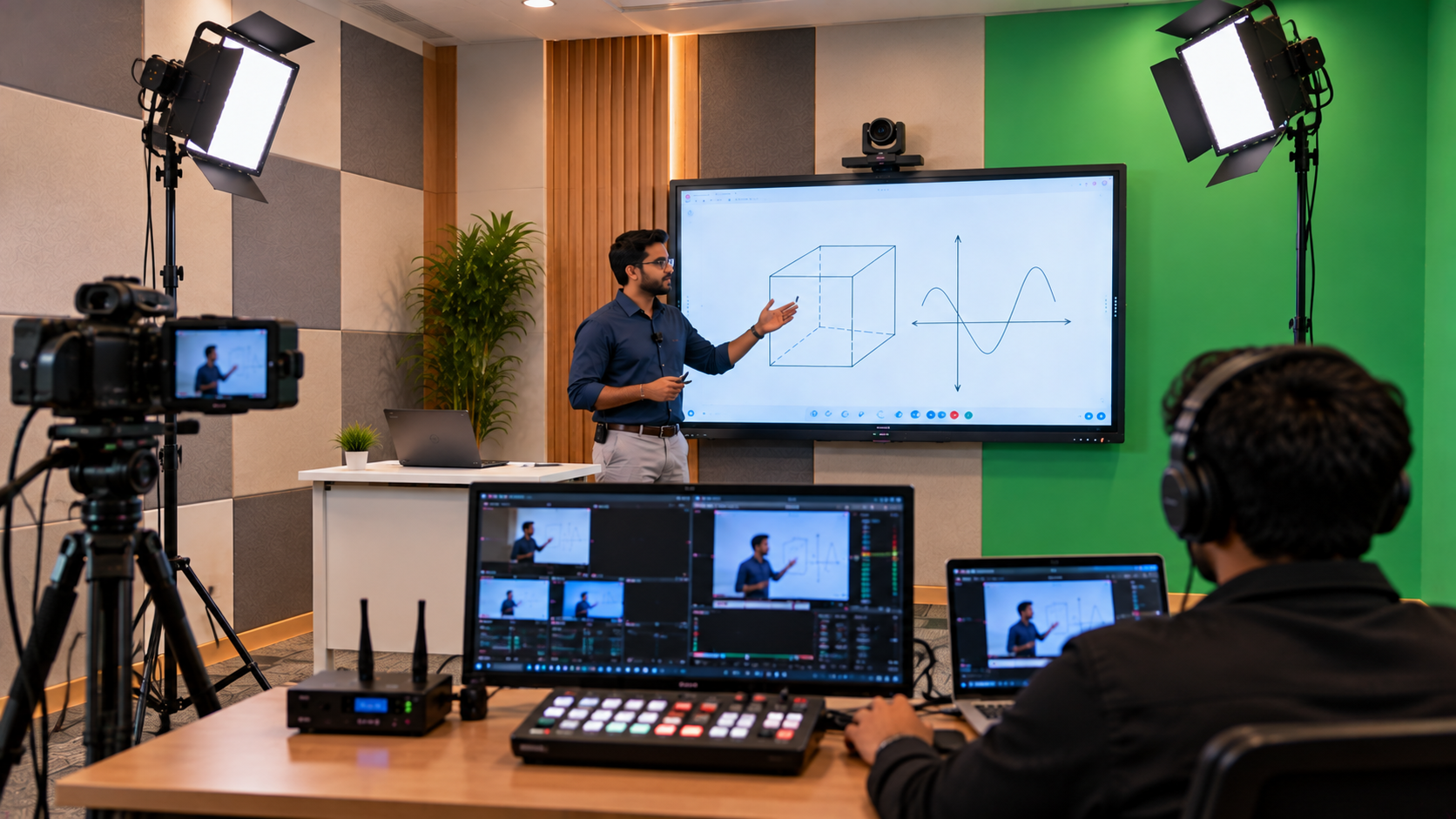
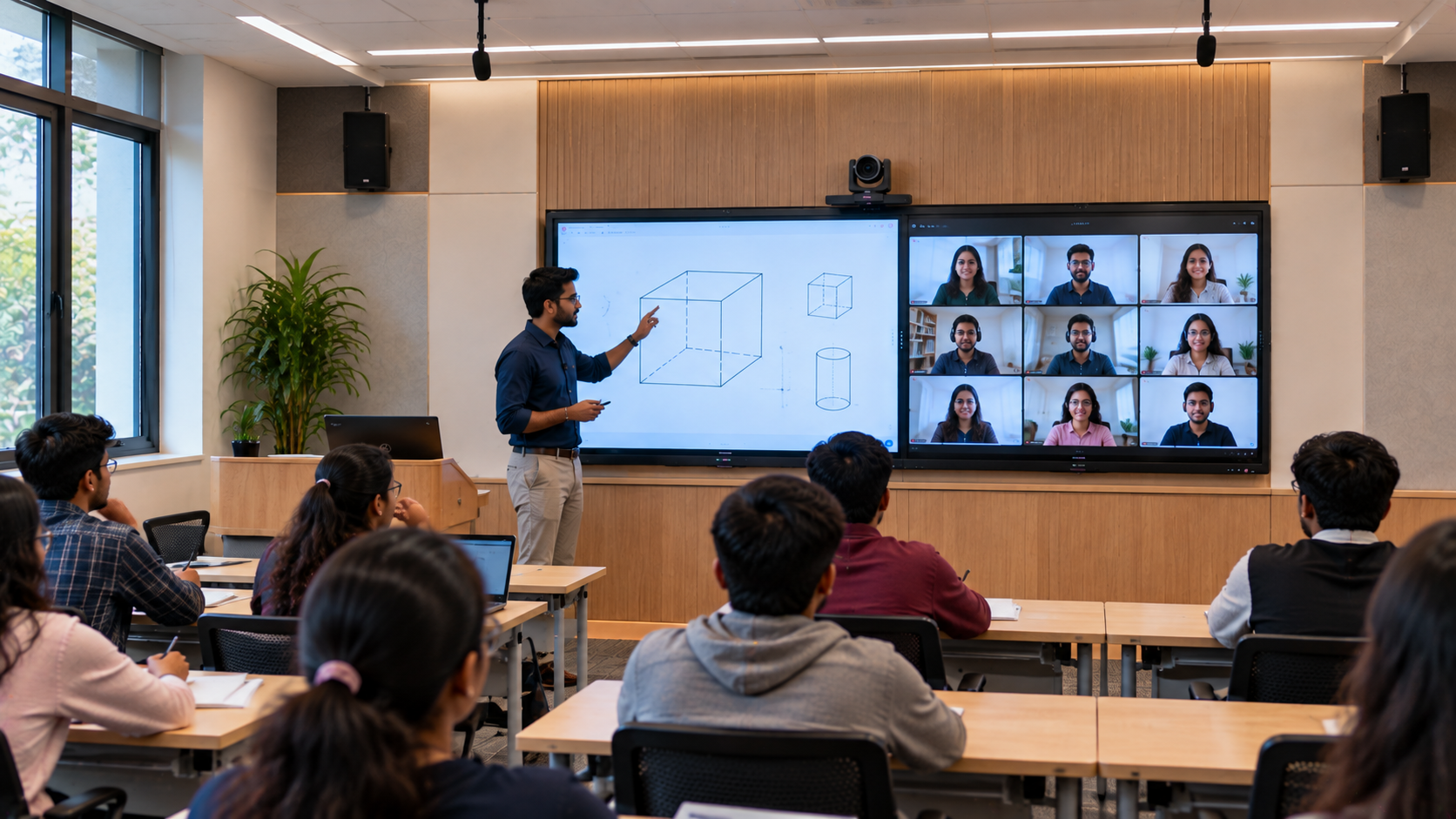
For classrooms and online teaching environments, GoLive also offers microphones, PTZ cameras, interactive panels and other online teaching equipment, allowing customers to build a complete setup instead of purchasing individual components without considering compatibility.
How to Match the Microphone to Your Room
Don't select equipment based only on a search such as “mic low price” or “best microphone for teachers.”
Instead, ask:
How many people will normally use the room?
How far will the furthest participant sit from the microphone?
Is the room acoustically treated?
Is the microphone being used for meetings, teaching or recording?
Does the system need USB, Bluetooth, XLR or another connection?
Will you use a PTZ camera and interactive display with it?
For a modern hybrid room, the microphone should be considered part of the entire AV ecosystem.
GoLive's conference-room solutions can combine a conference microphone system, PTZ camera, interactive display, mini PC/OPS PC and wireless presentation system, with optional soundbars or ceiling speakers.
Conference Microphone Price in India: What Should You Budget?
Conference microphone prices in India vary according to microphone array design, pickup range, connectivity, DSP features, speakers and room coverage.
As a current GoLive reference point:
Philips PSE0400: ₹9,999 listed price
Philips PSE0401: ₹12,499 listed price
Higher-end conference speakerphones and integrated video/audio solutions are also available.
Prices, offers and availability can change, so buyers should verify the current product page before placing an order.
For organizations in Delhi NCR and across India, GoLive eTechnologies can help identify the appropriate configuration rather than simply recommending the most expensive option.
Why Choose GoLive eTechnologies?
GoLive eTechnologies India Private Limited provides technology solutions across smart classrooms, interactive displays, video conferencing and related AV equipment. Its catalogue includes conference microphones, speakerphones, PTZ cameras and interactive panels.
The brand promise is straightforward:
Technology that works, backed by people who help.
From selecting a conference microphone to installation, configuration and user assistance, the focus is on making deployment easier.
Customers looking for a conference microphone in India, a conference speaker with mic, PTZ camera or complete hybrid classroom setup can use GoLive's product and solution range to build an appropriately matched system.
Final Buying Checklist
Before buying a conference microphone, make sure it offers:
Suitable pickup range for your room
Echo cancellation
Noise reduction
Clear speech reproduction
Appropriate USB/Bluetooth/wired connectivity
Compatibility with your conferencing platform
Suitable speaker output, if integrated
Installation and technical support when required
The best conference microphone is not necessarily the cheapest or the most powerful. It is the one that matches your room, participant count, acoustic environment and meeting workflow.
With GoLive eTechnologies, you can get support from selection through installation and beyond—helping you achieve less technology headache and more confidence that everything will work.
Ready to Upgrade Your Meeting Room?
Explore conference microphones, speakerphones, PTZ cameras and complete AV solutions from GoLive eTechnologies. Get expert assistance in choosing the right setup for your office, classroom, training centre or hybrid meeting space.
Your email address will not be published. Required fields are marked *
By Inhype • September 12, 2026
A smart classroom is only as effective as the technology supporting it. Interactive panels, smart boards, PTZ cameras, microphones, speakers, PCs and
Read More
By Inhype • September 12, 2026
Higher education is rapidly moving beyond traditional chalkboards and projectors. Today, colleges and universities need technology that supports inter
Read More
By Inhype • September 12, 2026
A smart classroom for CBSE schools is no longer simply a classroom with a digital board. Modern schools are building connected learning environments t
Read More
By Inhype • September 12, 2026
Planning a smart classroom project for 10, 20 or even 50 classrooms requires more than simply purchasing digital boards. Schools, colleges, universiti
Read More
By Inhype • September 12, 2026
A smart classroom can transform the way teachers explain concepts, students interact with lessons, and institutions deliver digital education. From in
Read More



Golive eTechnologies India Private Limited (CIN - U31909UP2021PTC148242) is one of India's leading providers of smart classrooms, interactive boards, video conferencing solutions, and display technologies for the education, healthcare, corporate, and government sectors.
No comments yet. Be the first to comment!