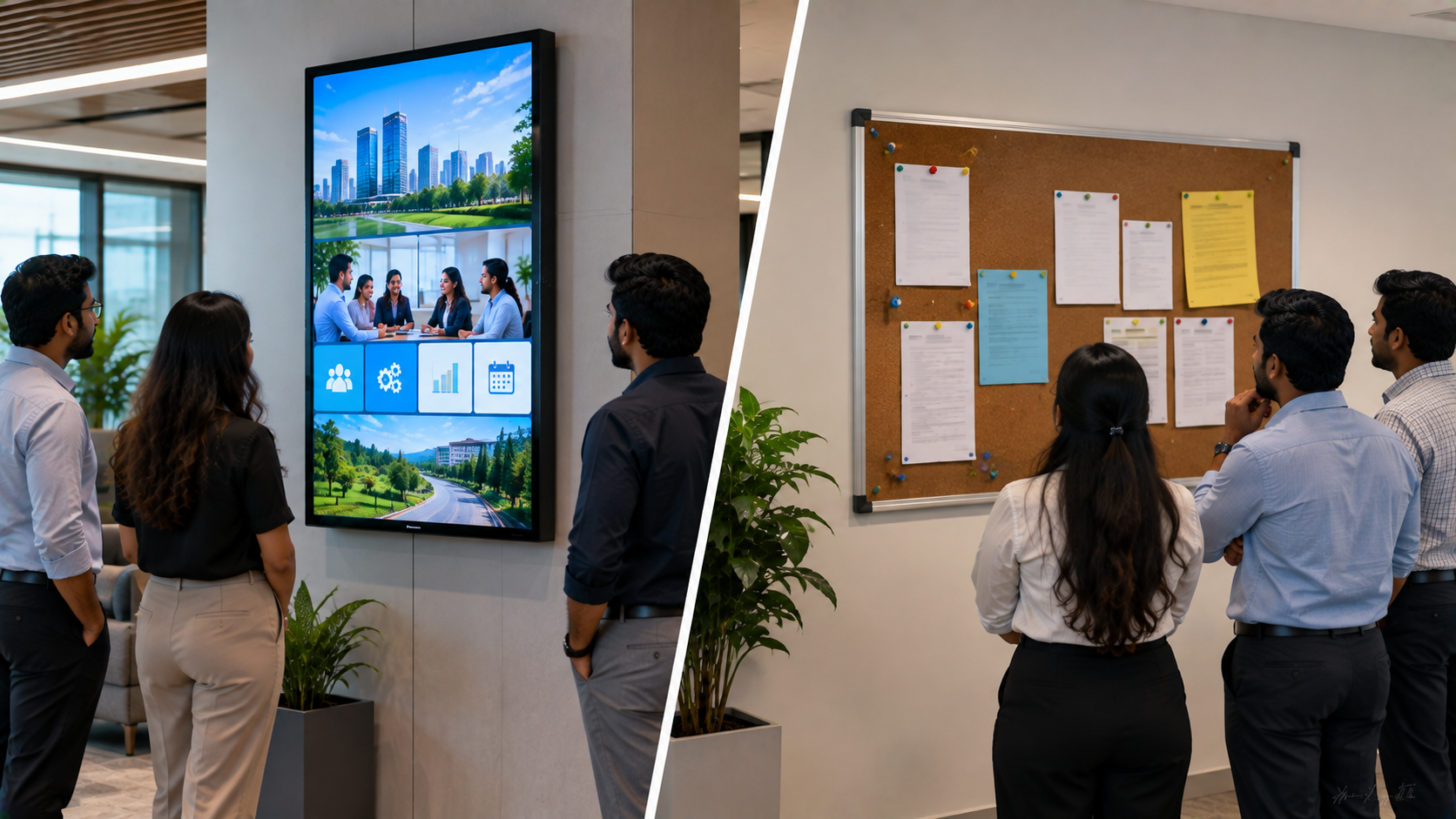
Schools, colleges, offices, hospitals, retail stores, coaching centres and public institutions all need an effective way to communicate information. Traditionally, notice boards have been the simplest solution. But as organisations move toward smarter communication, digital signage and interactive displays are becoming increasingly common. So, is investing in a digital screen really worth it when a traditional notice board costs much less? The answer depends on how frequently you communicate, how quickly information needs to change, and how much value you place on visibility, flexibility and long-term usability. For organisations planning a smart classroom, digital classroom, reception area, corporate communication system or digital bulletin board, the comparison between traditional notice boards and digital signage is particularly relevant.
What Is a Traditional Notice Board?
A traditional notice board uses printed sheets, posters, announcements and physical documents to communicate information.
It remains useful for:
Permanent notices
Printed schedules
Classroom instructions
Government or compliance notices
Low-frequency communication
Areas where electricity or connectivity is limited
The biggest advantage is its low initial cost. However, every change generally requires printing, replacing and physically arranging content.
For organisations managing frequent announcements, this can become time-consuming.
What Is Digital Signage?
Digital signage uses an electronic display to show announcements, videos, images, presentations, schedules, advertisements and other information.
Depending on the setup, organisations can use a commercial display, LED screen, smart display or interactive flat panel display.
A digital signage solution can be used for:
School announcements
Campus information
Reception and visitor communication
Corporate announcements
Retail promotions
Hospital information
Coaching-centre schedules
Event communication
Digital bulletin boards
Wayfinding and directions
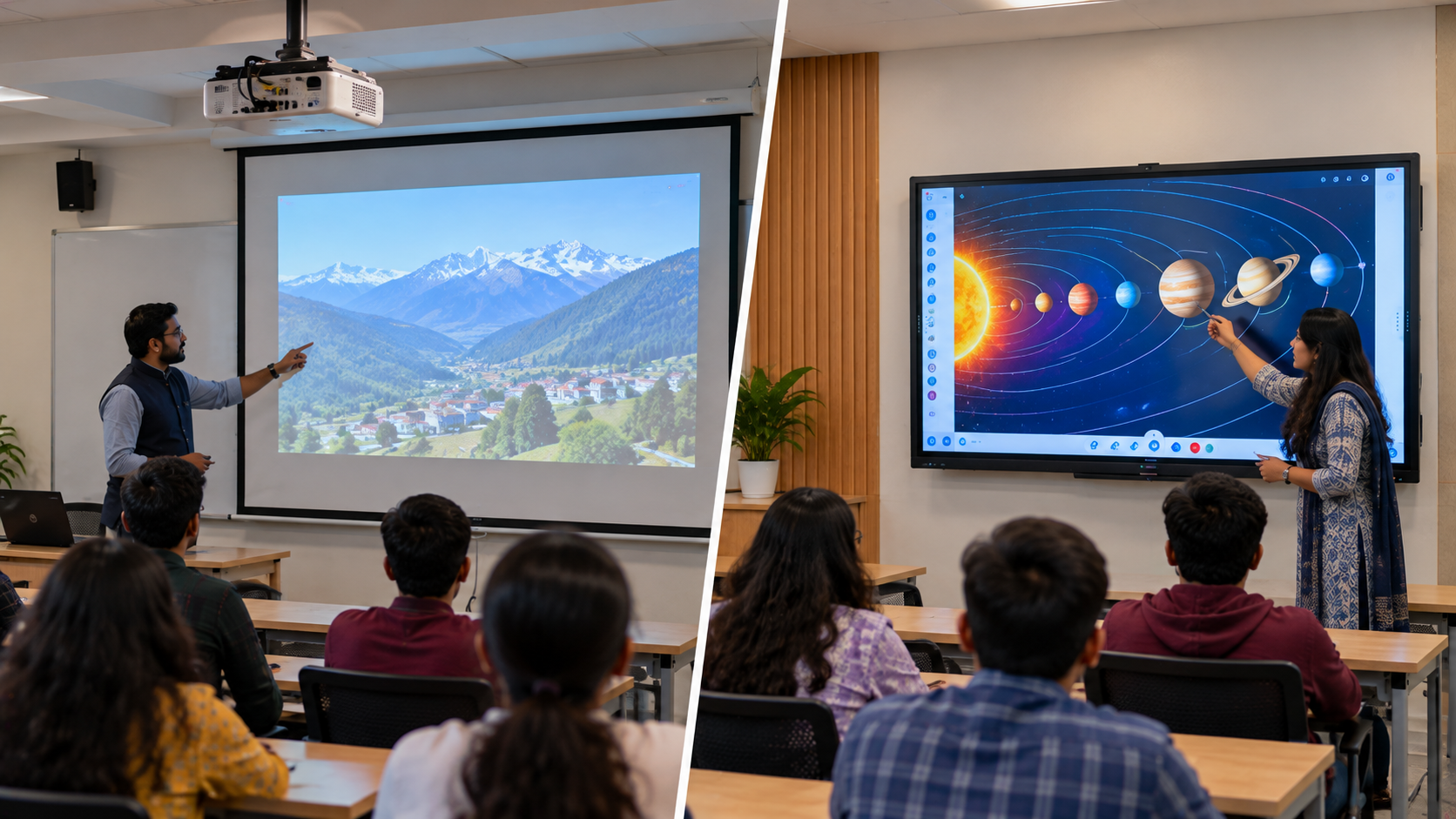
For schools and educational institutions, a digital board for classroom applications can also extend beyond announcements into teaching and collaboration.
Digital Signage vs Traditional Notice Board: Key Differences
|
Feature |
Traditional Notice Board |
Digital Signage |
|---|---|---|
|
Initial cost |
Lower |
Higher |
|
Content updates |
Manual |
Digital |
|
Images |
Static |
High-resolution |
|
Video |
Not possible |
Supported |
|
Multiple messages |
Limited |
Multiple content formats |
|
Remote updates |
No |
Possible with suitable systems |
|
Engagement |
Basic |
More dynamic |
|
Maintenance |
Paper replacement |
Technical maintenance |
|
Long-term functionality |
Limited |
Multi-purpose |
|
Classroom use |
Limited |
Teaching, presentation & collaboration |
The important point is that a digital display does not necessarily replace a notice board in every situation. Instead, it can become a multi-purpose communication and presentation platform.
Is a Digital Board Worth the Investment?
The digital board price in India varies considerably depending on screen size, technology, features, brand and installation requirements.
For example, buyers researching an Evota smart board price, Evota digital board price, Newline smart board price, MAXHUB smart board price, or LG interactive digital board price may find significant differences between models.
However, purchase price alone should not determine the decision.
Consider the total value generated by the display.
1. Faster Content Updates
A printed notice requires designing, printing and physically replacing the document.
Digital signage allows organisations to update content electronically, making it particularly useful for:
Daily announcements
Event schedules
Timetables
Promotional campaigns
Emergency information
Meeting-room information
This can reduce the repetitive work associated with physical notices.
2. More Than a Notice Board
An interactive display can serve several purposes beyond communication.
A school, for example, can use an Evota interactive panel, Newline interactive panel, MAXHUB digital board or compatible LG interactive panel for:
Classroom teaching
Presentations
Digital whiteboarding
Video playback
Collaboration
Online and hybrid classes
This multi-purpose functionality can make the investment more valuable than a display used solely as a digital notice board.
3. Better Visual Communication
Digital displays can combine:
Text
Images
Videos
Presentations
Animations
Live information
This is useful when organisations need information to attract attention quickly.
For example, a coaching centre could display class schedules and admissions information, while a corporate office could show announcements, dashboards and meeting information.
4. Useful for Smart Classrooms
The growth of smart classes in India has increased demand for technology that supports interactive teaching.
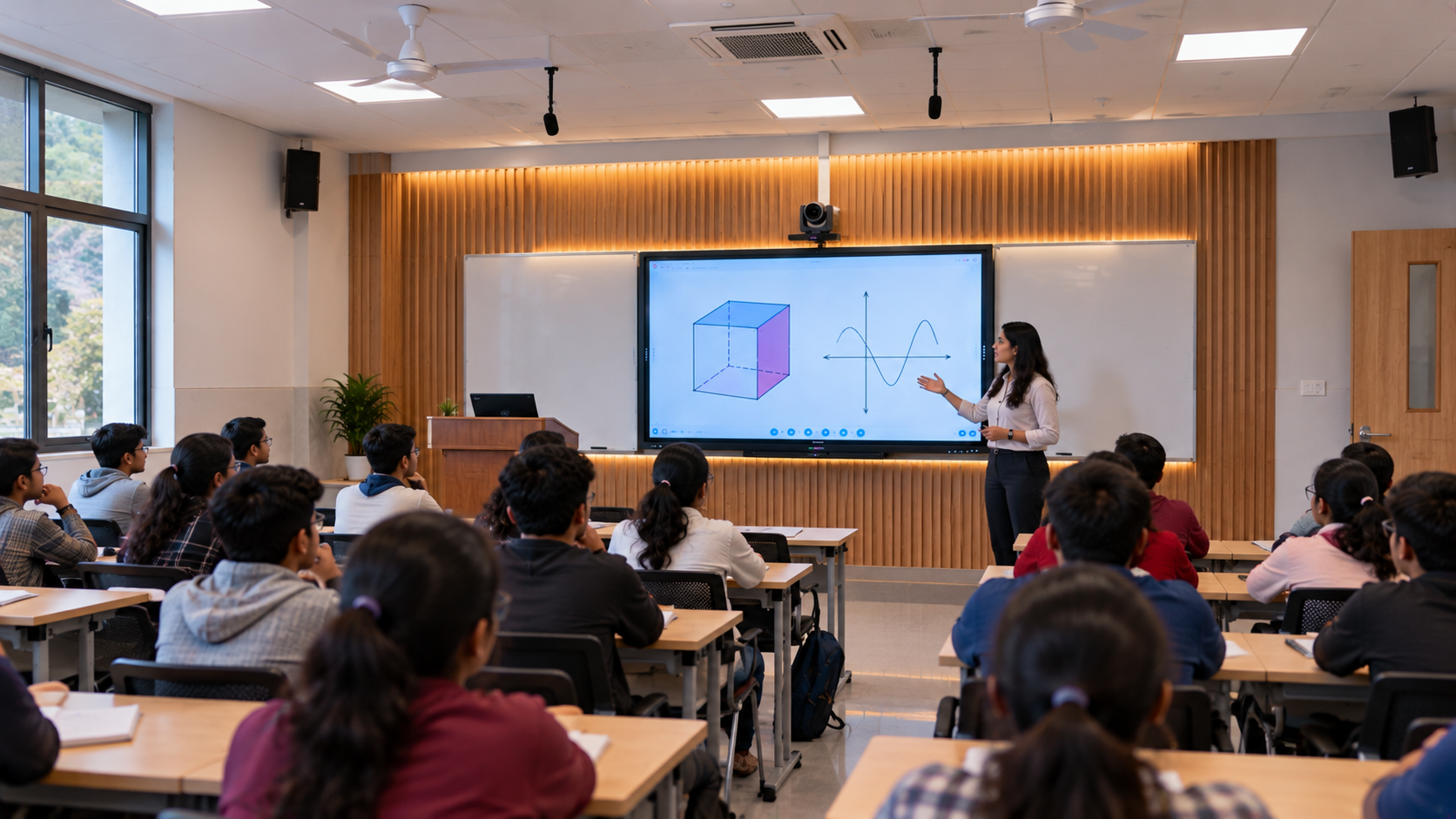
An interactive flat panel, digital smart board, or smart board for classroom can combine teaching and communication functions.
Features such as touchscreen interaction, digital writing and multimedia support can help teachers move beyond conventional whiteboards.
Digital Signage for Schools, Colleges and Coaching Centres
Educational institutions are among the most relevant users of digital displays.
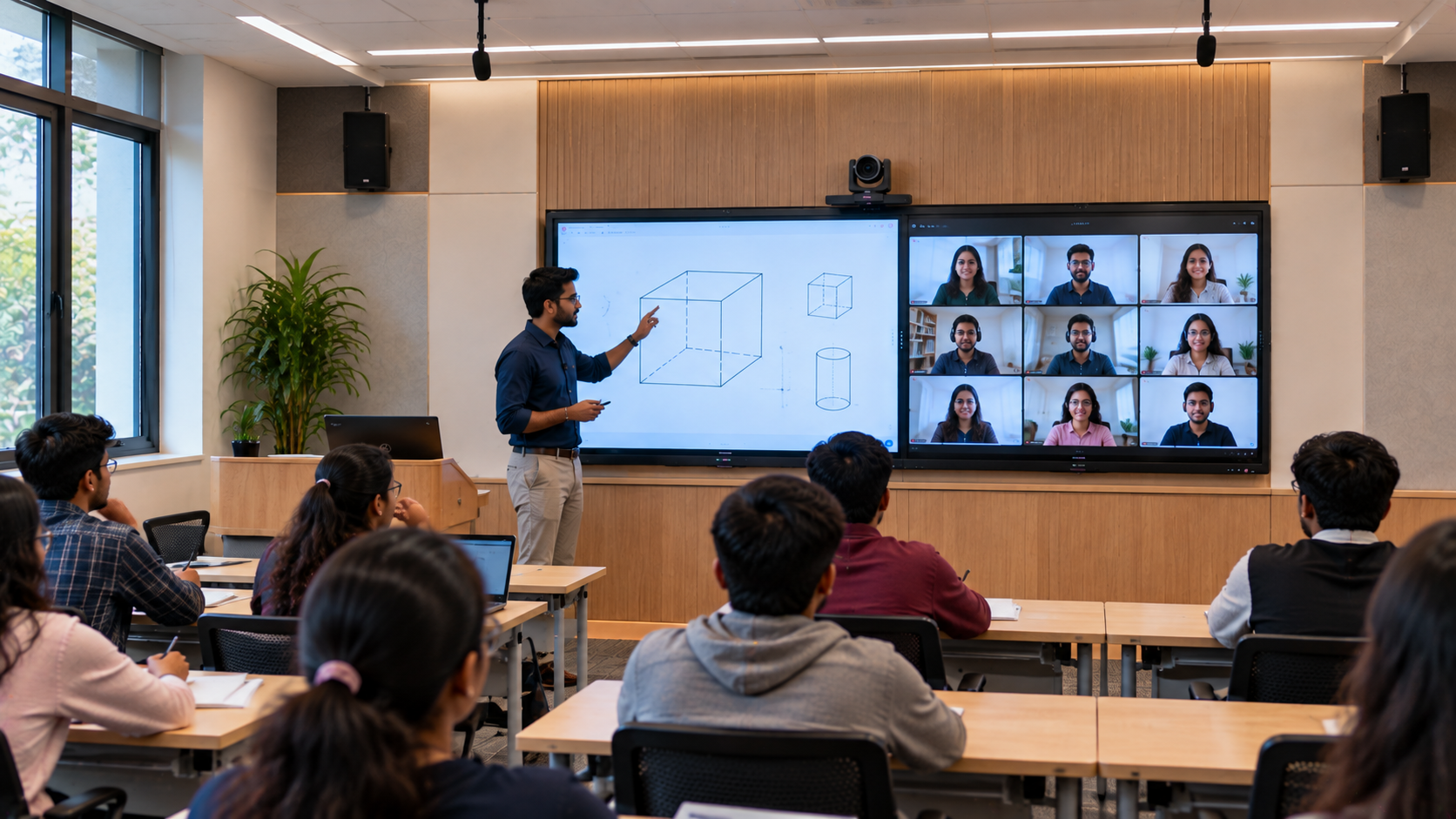
A school can use an interactive board for teaching while also using the same technology for presentations, announcements and collaborative activities.
A complete digital classroom setup may include:
Interactive flat panel
PTZ camera
Microphone
Speakers
Computer or OPS
HDMI/video capture equipment
Online teaching accessories
For institutions creating an online teaching setup or hybrid classroom, a PTZ camera such as an Evota 4K PTZ camera can complement an interactive display.
GoLive eTechnologies can help organisations evaluate the right combination instead of purchasing individual devices without considering the complete setup.
Digital Signage for Offices and Corporate Spaces
Corporate environments can use digital screens for:
Reception announcements
Employee communication
Meeting-room information
Internal campaigns
Performance dashboards
Visitor information
Training presentations
A suitable digital screen board can therefore become part of the organisation's everyday communication infrastructure.
The same display can potentially serve multiple departments, improving utilisation compared with a traditional printed notice board.
What About Pricing?
Searches such as digital board price under 5000, interactive panel price, 75 inch interactive display, Evota smart board 75 inch price, Newline digital board 75 inch price, LG interactive panel 75 inch price, and MAXHUB digital board price in India show that buyers are often comparing products primarily on price.
However, very low-cost boards and professional interactive panels are not directly comparable.
When evaluating pricing, consider:
Screen size
Display resolution
Touch technology
Software
Connectivity
Warranty
Mounting
Installation
Teacher/user training
After-sales support
Future service requirements
A slightly higher initial investment may provide greater practical value if the product is used every day.
Why Choose GoLive eTechnologies?
GoLive eTechnologies focuses on making technology adoption easier from selection to deployment.
Its approach is built around a simple promise:
Technology that works, backed by people who help.
Instead of treating the purchase as simply a product transaction, GoLive eTechnologies can support customers through the technology journey.
End-to-End Technology Support
From selecting the appropriate digital board, interactive panel or classroom equipment to installation and ongoing assistance, the objective is to reduce technology-related headaches.
Customers can benefit from:
Solution selection
Product guidance
Installation support
Faster deployment
User assistance
Training support
After-sales assistance
This is especially relevant for schools, offices and institutions where technology needs to work reliably from day one.
Digital Signage or Traditional Notice Board: Which Should You Choose?
A traditional notice board may still make sense when communication is infrequent and the primary requirement is low-cost printed information.
Digital signage becomes more relevant when an organisation needs:
Frequent content updates
Multimedia communication
Better visibility
Centralised communication
Interactive teaching
Presentation capabilities
Hybrid learning
Multi-purpose technology
The investment should therefore be evaluated according to usage, functionality and total value, rather than screen price alone.
Final Verdict: Think Beyond the Notice Board
The biggest difference between a traditional notice board and digital signage is not simply the screen.
It is what the technology allows you to do with the same space.
A traditional board communicates information. A modern digital display can communicate, teach, present, collaborate and engage.
For organisations considering an interactive flat panel for education, corporate display, digital bulletin board or smart classroom solution, GoLive eTechnologies can help identify the right technology, coordinate deployment and provide support beyond the purchase.
Technology should reduce complexity—not create another headache.
Your email address will not be published. Required fields are marked *
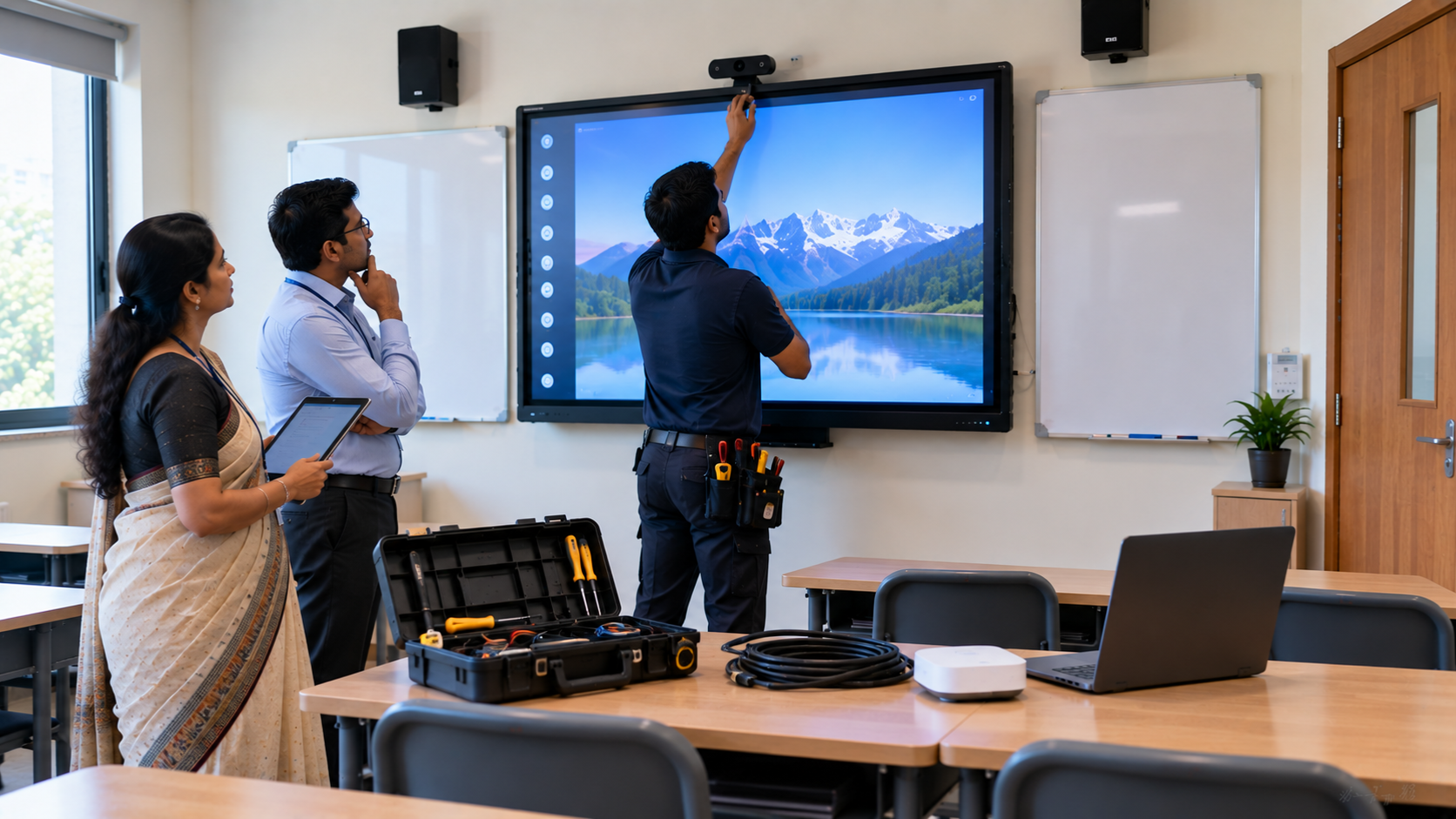
By Inhype • September 12, 2026
A smart classroom is only as effective as the technology supporting it. Interactive panels, smart boards, PTZ cameras, microphones, speakers, PCs and
Read More
By Inhype • September 12, 2026
Higher education is rapidly moving beyond traditional chalkboards and projectors. Today, colleges and universities need technology that supports inter
Read More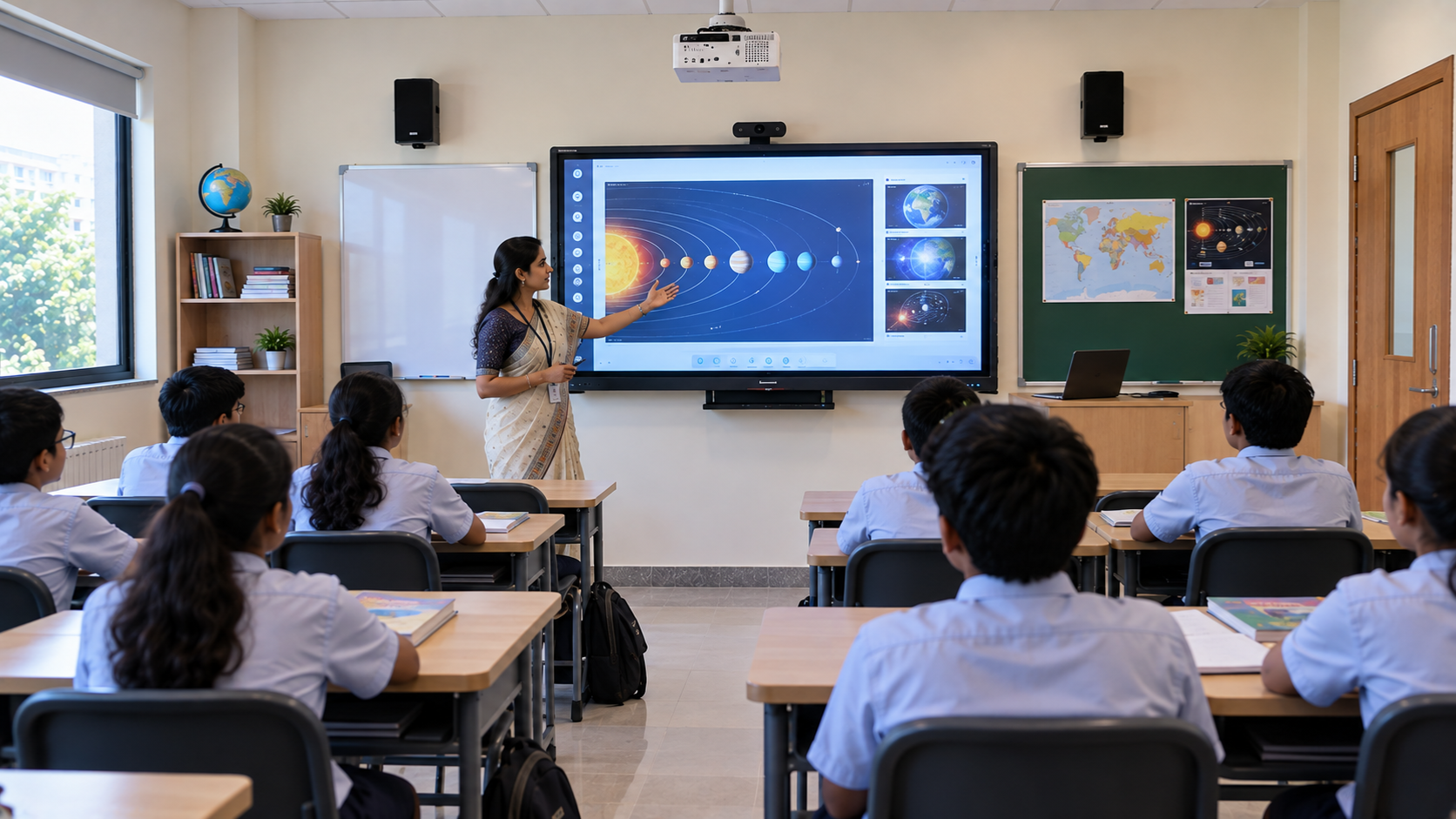
By Inhype • September 12, 2026
A smart classroom for CBSE schools is no longer simply a classroom with a digital board. Modern schools are building connected learning environments t
Read More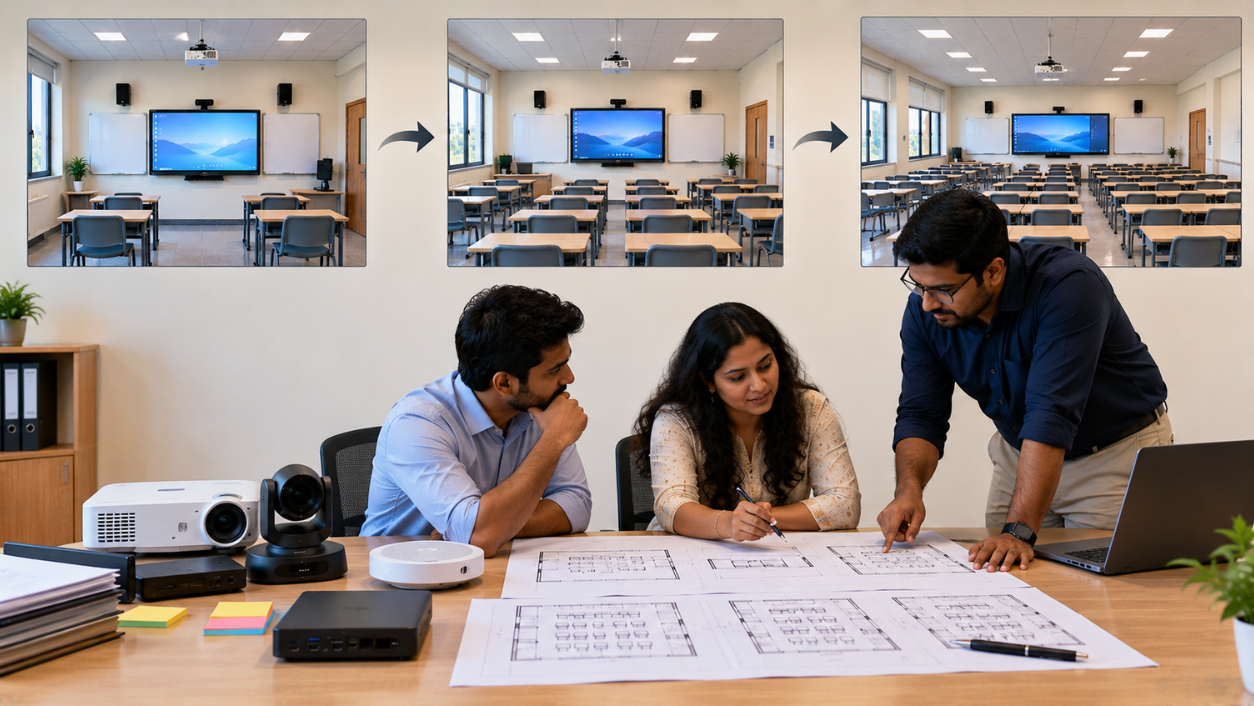
By Inhype • September 12, 2026
Planning a smart classroom project for 10, 20 or even 50 classrooms requires more than simply purchasing digital boards. Schools, colleges, universiti
Read More
By Inhype • September 12, 2026
A smart classroom can transform the way teachers explain concepts, students interact with lessons, and institutions deliver digital education. From in
Read More




Golive eTechnologies India Private Limited (CIN - U31909UP2021PTC148242) is one of India's leading providers of smart classrooms, interactive boards, video conferencing solutions, and display technologies for the education, healthcare, corporate, and government sectors.




No comments yet. Be the first to comment!