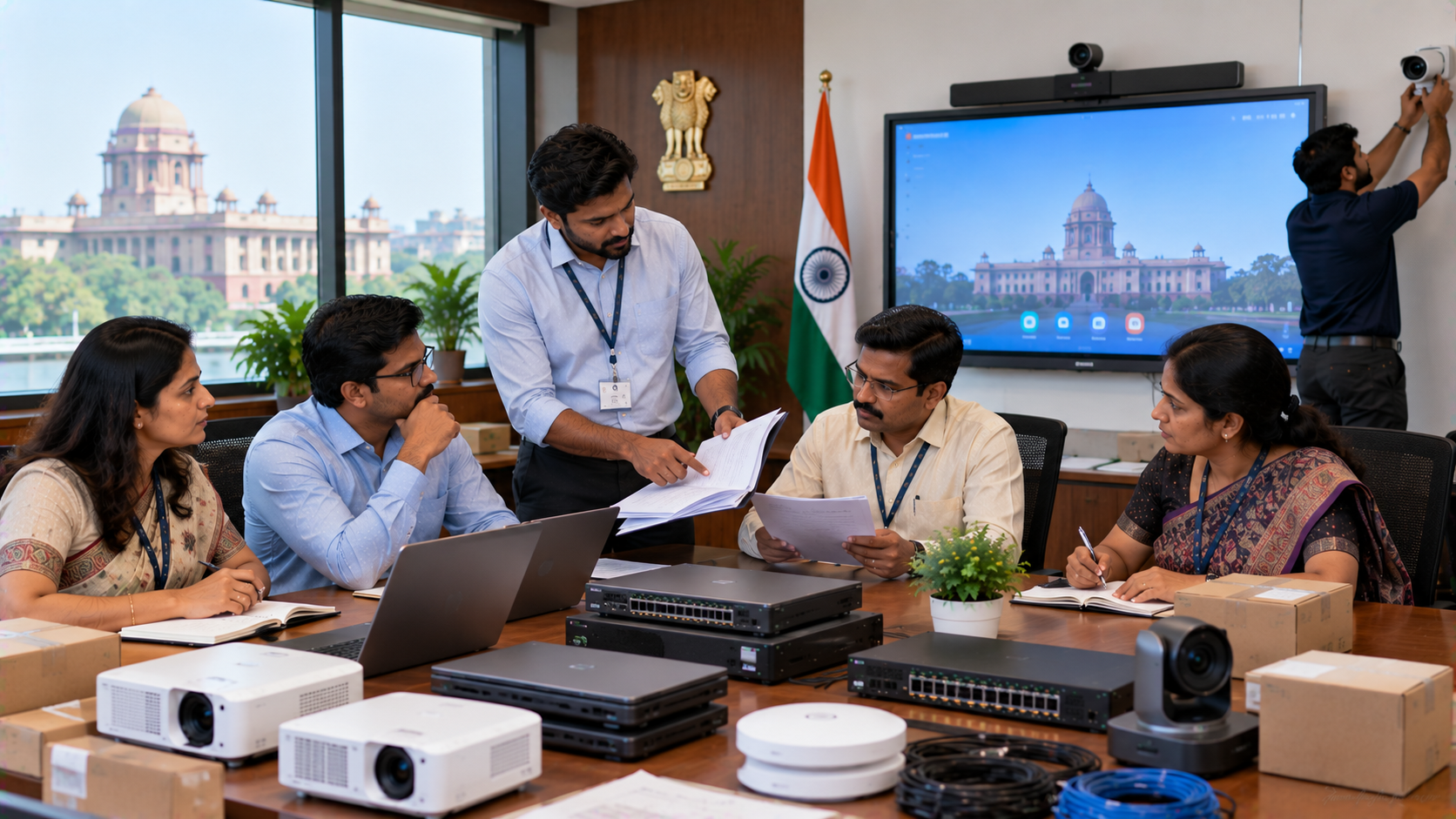
Technology procurement in a government institution is not simply about finding a digital board, camera, computer or display at the lowest price. The real objective is to select technology that meets the institution’s functional requirements, fits the approved procurement process and remains dependable after installation. For government schools, colleges, training centres, departments, public-sector offices and other institutions, a good technology procurement strategy in India should cover specifications, budget, procurement route, installation, warranty, training, service and long-term usability. This is where an experienced technology partner can make the process easier. GoLive eTechnologies India Private Limited brings together interactive displays, digital boards, PTZ cameras, OPS Mini PCs, microphones, commercial displays and related AV solutions, backed by end-to-end assistance from selection to installation and beyond.
1. Begin with the Requirement, Not the Brand
The first step in government technology procurement should be a clear requirement document.
Instead of starting with a product name such as an Evota smart board, MAXHUB smart board, LG interactive panel or Newline interactive panel, define measurable requirements such as:
Screen size: 65-inch, 75-inch or 86-inch
Resolution: 4K UHD where required
Operating system and software compatibility
RAM and internal storage
HDMI, USB-C, USB, LAN and touch connectivity
Camera resolution and optical zoom
Audio requirements for classrooms, conference rooms or auditoriums
Wall-mount or mobile-stand requirement
Warranty and service expectations
Government procurement guidance for Central Government Ministries and Departments emphasises objective, functional, generic and measurable specifications rather than specifications tied to a particular brand.
This approach also makes comparison between an Evota interactive panel, MAXHUB digital board, LG interactive digital board or Newline digital board more transparent.
2. Check the Applicable Government Procurement Route
Procurement rules can differ depending on whether the buyer is a Central Government Ministry/Department, State Government organisation, autonomous body, university, local body or another public institution.
For Central Government Ministries and Departments, the current GFR framework states that common-use goods and services available on the Government e-Marketplace (GeM) are to be procured through GeM. Current Rule 149 also sets purchase procedures based on value, including direct purchasing up to ₹50,000, purchases above ₹50,000 up to ₹10 lakh through specified GeM procedures, and mandatory bidding/reverse-auction mechanisms above ₹10 lakh, subject to the applicable provisions and notified exceptions.
Before issuing a purchase order, procurement teams should therefore confirm:
Requirement → applicable rules → GeM/tender route → technical specifications → quotation/bid evaluation → purchase order → installation and acceptance.
The Government of India's eProcurement system also provides online tender discovery and submission through the central platform.
3. Create Vendor-Neutral Technical Specifications
A strong government technology tender should describe what the technology must deliver, rather than simply naming a preferred brand.
For example, instead of writing only:
“Purchase one particular smart board brand.”
A more procurement-friendly requirement can specify:
“75-inch 4K interactive flat panel with integrated Android platform, suitable connectivity, screen-sharing capability, touch interaction, required accessories, warranty and installation support.”
The same principle applies to cameras.
A PTZ camera specification could include:
|
Requirement |
Example consideration |
|---|---|
|
Resolution |
1080p or 4K |
|
Optical zoom |
10X/12X depending on room |
|
Tracking |
Auto-framing/auto-tracking where required |
|
Connectivity |
USB, HDMI, LAN, SDI as required |
|
Control |
RS232/RS485/IP or compatible control |
|
Application |
Lecture capture, conferencing, hybrid classrooms |
This allows procurement teams to evaluate suitable options from GoLive and other qualified suppliers against the actual requirement.
4. Calculate Total Cost, Not Just Digital Board Price
A low upfront digital board price in India does not automatically mean a lower project cost.
Government institutions should budget for the complete technology lifecycle:
Equipment + accessories + mounting + installation + configuration + training + warranty + maintenance + replacement requirements
For example, a digital classroom may require:
Interactive flat panel
OPS Mini PC
PTZ camera
Microphone
Speakers
Mounting hardware
Networking and cabling
Installation and commissioning
Teacher/user training
GoLive currently lists products across these categories, allowing institutions to evaluate a complete technology ecosystem rather than purchasing isolated devices. Its catalogue includes interactive flat panels, PTZ cameras, OPS Mini PCs, microphones, commercial displays and speaker solutions.
5. Match the Product to the Government Institution's Use Case
Different spaces require different technology.
Classrooms and Training Centres
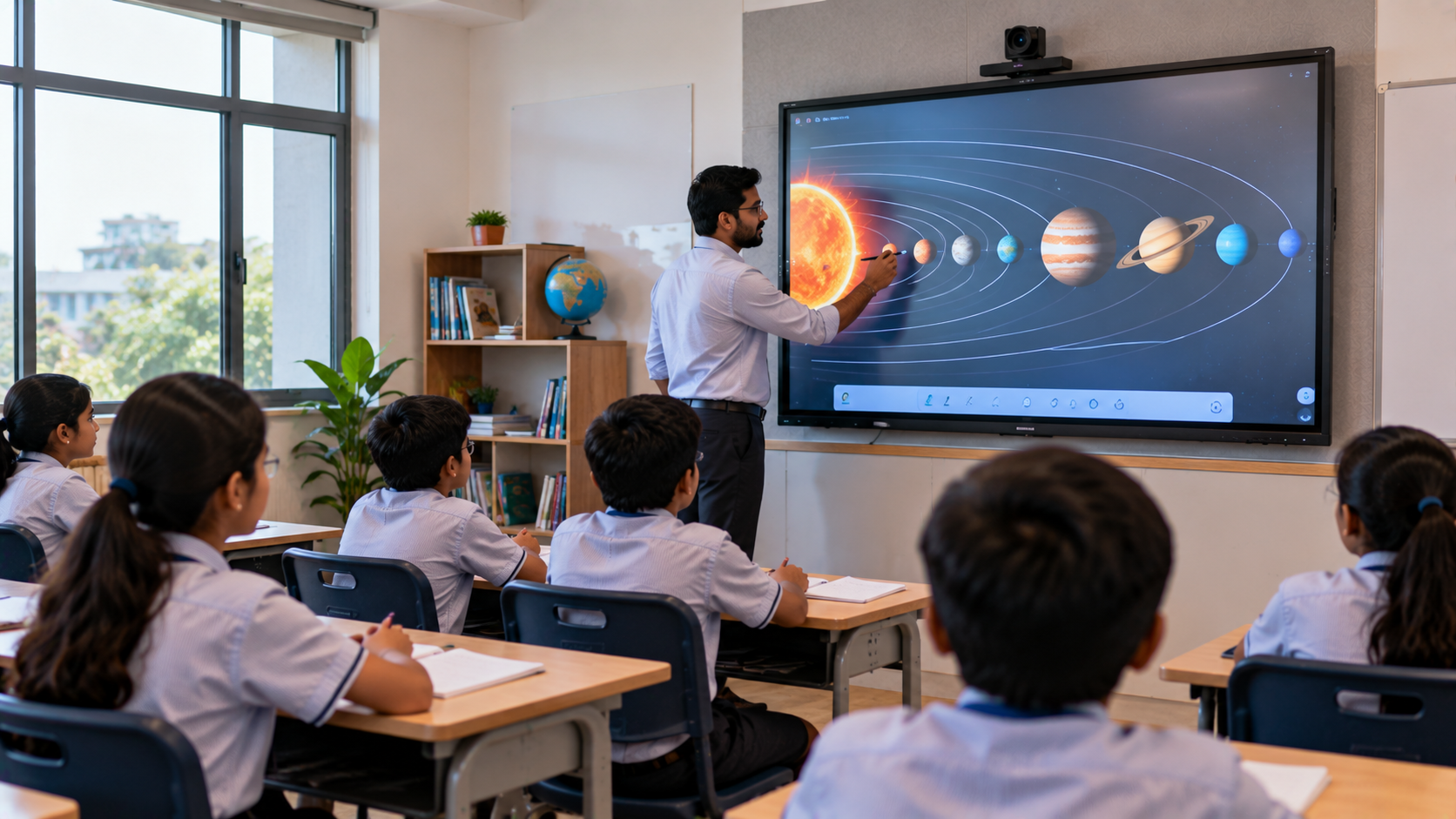
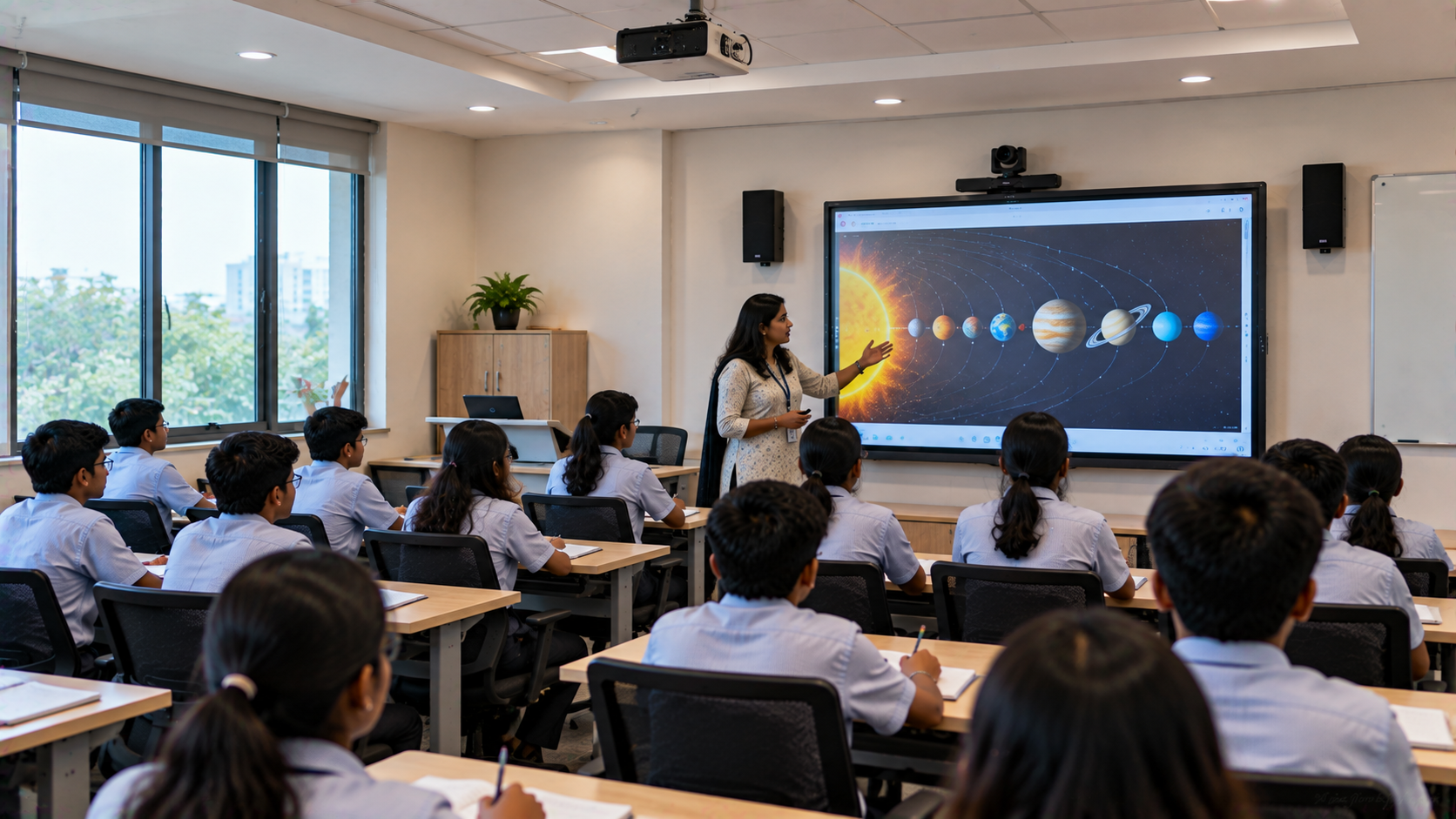
An interactive flat panel display can support digital teaching, presentations, screen sharing, annotation and collaborative learning.
For example, the Evota EP75 75-inch 4K UHD interactive panel is currently listed by GoLive at ₹92,700, with 4K resolution, Android 14, 8GB RAM, 128GB storage, multiple connectivity options and a 3-year onsite warranty. Its listed applications include smart classrooms, hybrid learning, training rooms, video conferencing and government projects.
Boardrooms and Hybrid Meetings
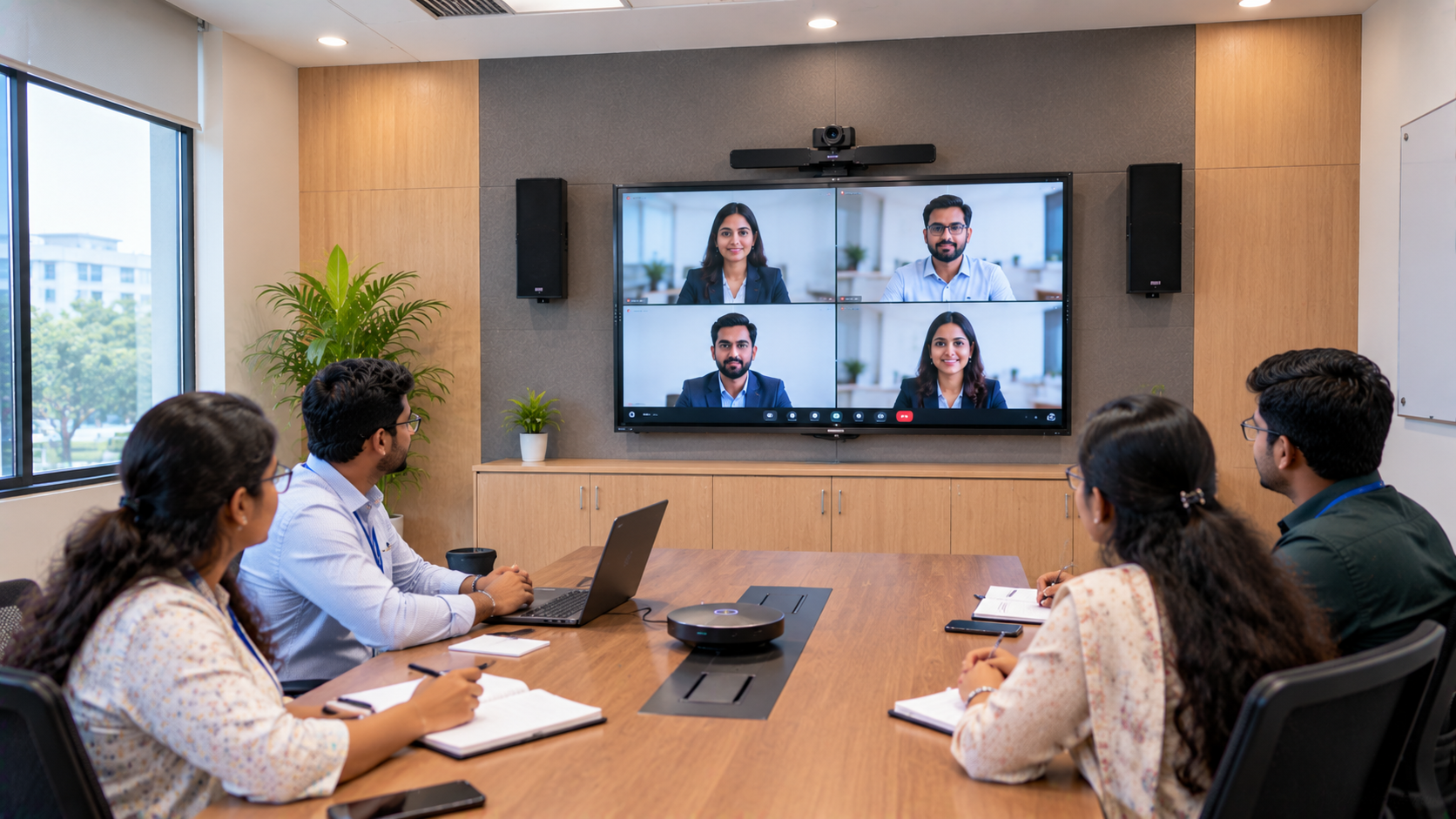
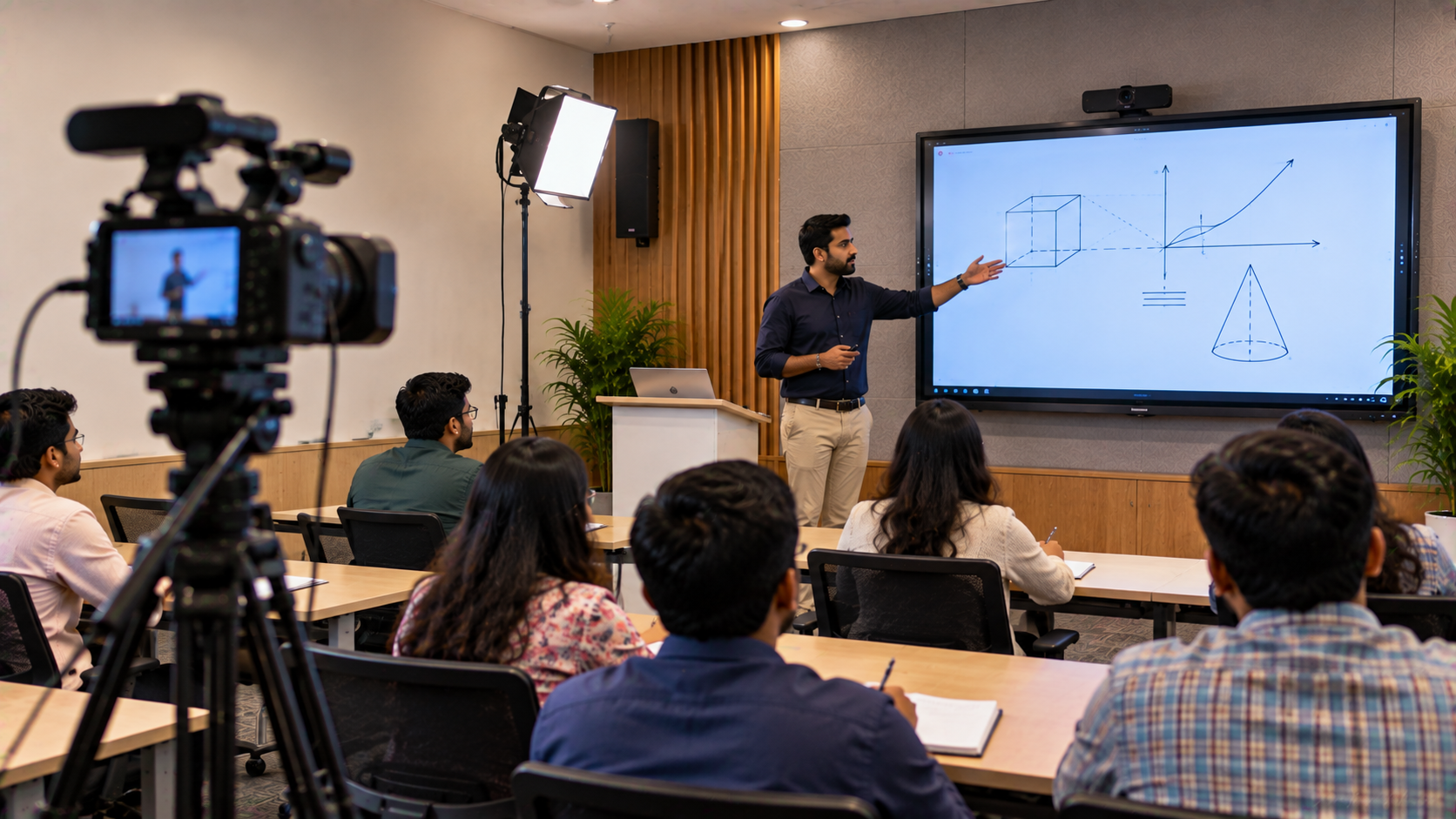
A PTZ camera is more appropriate where remote participants, official meetings, presentations or hybrid sessions are important.
The Evota C12HULT 4K PTZ camera is currently listed at ₹51,000 and features 12X optical zoom, AI auto-tracking, auto-framing and HDMI, USB, LAN and SDI connectivity.
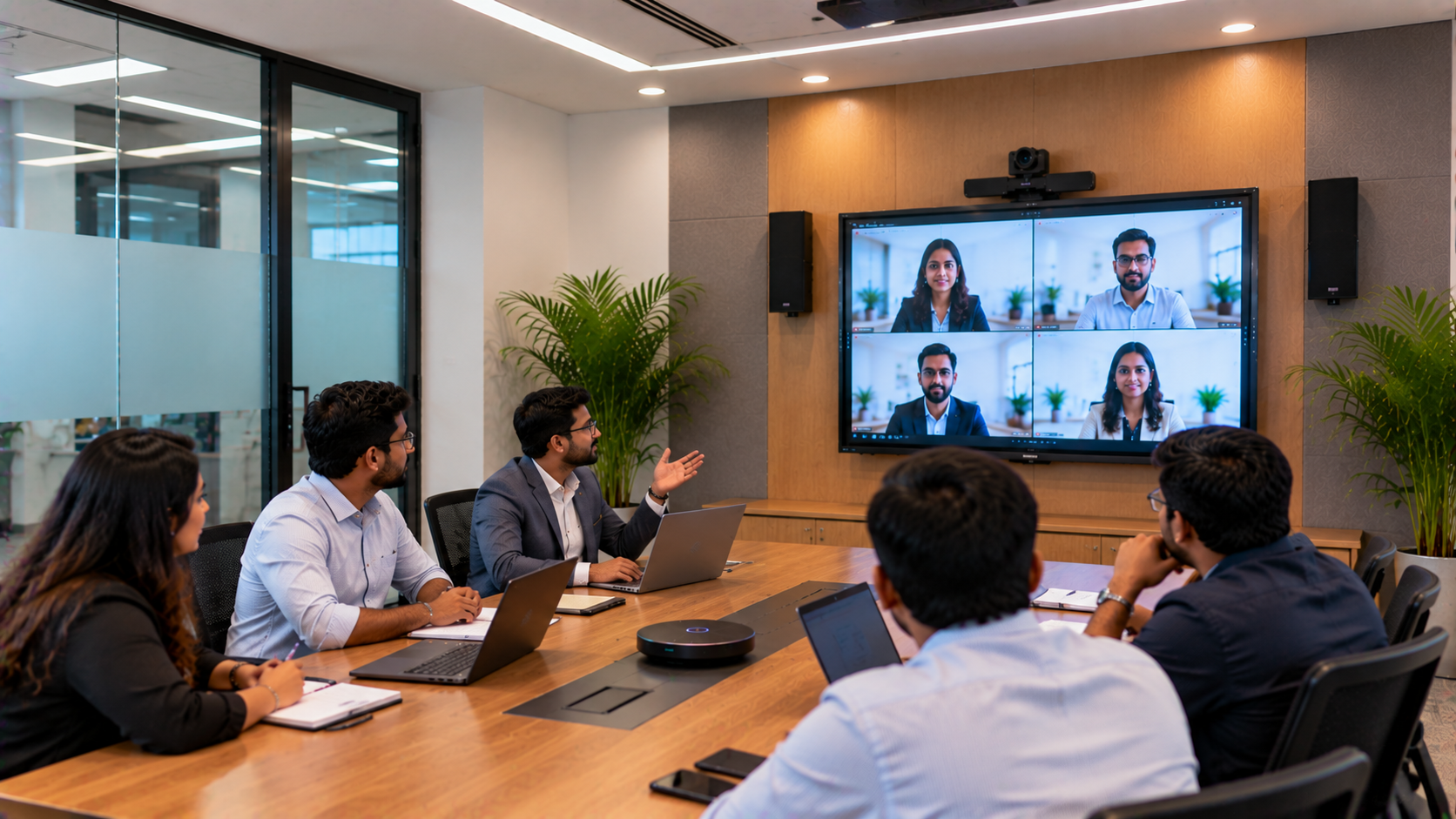
Large Conference Rooms and Meeting Spaces
The MAXHUB UC P25 4K PTZ camera is currently listed at ₹58,200. It provides 12X optical zoom, 4K video, PoE, USB, HDMI, LAN, RS232/RS485 and SDI connectivity, making it relevant for conferencing and hybrid meeting environments.
Digital Boards Requiring Dedicated Computing
For institutions that want a dedicated Windows computing environment, GoLive currently lists an Intel Core i5 12th Gen OPS PC Module with 8GB RAM, 256GB SSD, Wi-Fi and Bluetooth at ₹27,000.
Important: Prices and availability can change. Government buyers should use the current product page, quotation or applicable procurement platform as the final commercial reference.
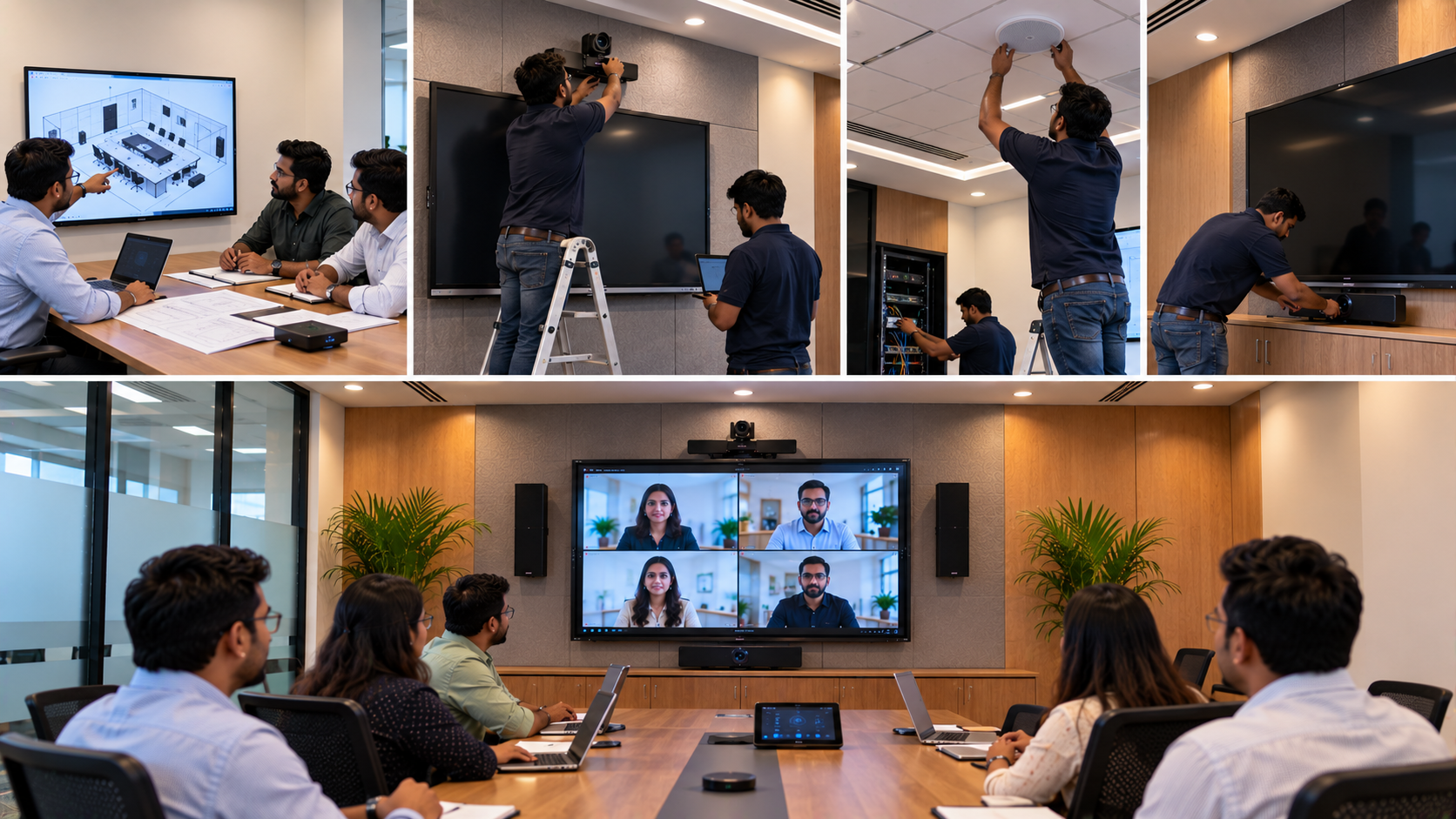
6. Make Installation, Training and Support Part of the Procurement
Technology procurement is incomplete when boxes are delivered but users are left to configure everything themselves.
The purchase specification should clearly address:
Delivery timeline
Installation and commissioning
Configuration and testing
Warranty terms
Service escalation process
User training
Documentation and handover
Accessories and replacement requirements
This is particularly important for government institutions where multiple classrooms, offices or training rooms may be deployed together.
GoLive’s core proposition is “Technology that works, backed by people who help.” Its service approach is built around the complete journey: right solution + fast deployment + installation + support, helping institutions reduce technology-related uncertainty.
7. Consider Local Execution for Delhi NCR and Pan-India Projects
For large public-sector deployments, supplier location and service capability can matter alongside the product itself.
GoLive eTechnologies lists its registered office in Indirapuram, Ghaziabad, Uttar Pradesh, with dedicated sales and service contacts. The company states that it provides technology solutions to education, healthcare, corporate and government sectors.
For institutions searching for digital board price in Delhi NCR, interactive panel price in India, PTZ camera solutions, or government technology solutions in Delhi, Noida and Ghaziabad, a supplier capable of supporting selection, deployment and post-sale assistance can simplify project execution.
Final Government Technology Procurement Checklist
Before approving a technology purchase, verify:
Requirement
Is the use case clearly defined?
Specification
Are technical specifications generic, measurable and sufficient?
Procurement Route
Has the applicable GeM, tender or institutional process been confirmed?
Budget
Have installation, accessories and support been considered?
Vendor
Has supplier capability, documentation and service scope been checked?
Deployment
Are installation, testing, training and handover included?
After-Sales
Are warranty and service responsibilities clearly documented?
Plan Your Government Technology Procurement with GoLive eTechnologies
From Evota smart boards and interactive panels to PTZ cameras, MAXHUB digital boards and OPS computing solutions, GoLive eTechnologies helps institutions move from product selection to deployment with practical technology support.
Technology that works, backed by people who help.
Explore solutions at GoLive eTechnologies or enquire for a requirement-based technology proposal.
Your email address will not be published. Required fields are marked *
By Inhype • September 12, 2026
A smart classroom is only as effective as the technology supporting it. Interactive panels, smart boards, PTZ cameras, microphones, speakers, PCs and
Read More
By Inhype • September 12, 2026
Higher education is rapidly moving beyond traditional chalkboards and projectors. Today, colleges and universities need technology that supports inter
Read More
By Inhype • September 12, 2026
A smart classroom for CBSE schools is no longer simply a classroom with a digital board. Modern schools are building connected learning environments t
Read More
By Inhype • September 12, 2026
Planning a smart classroom project for 10, 20 or even 50 classrooms requires more than simply purchasing digital boards. Schools, colleges, universiti
Read More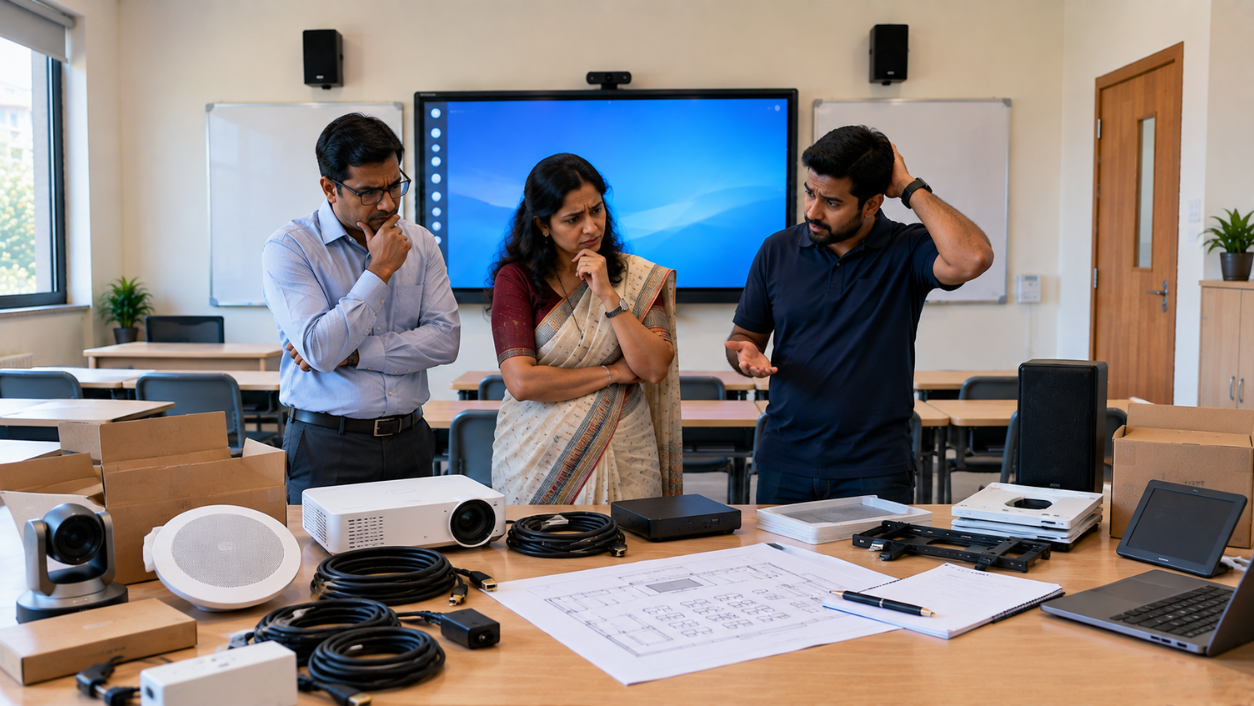
By Inhype • September 12, 2026
A smart classroom can transform the way teachers explain concepts, students interact with lessons, and institutions deliver digital education. From in
Read More



Golive eTechnologies India Private Limited (CIN - U31909UP2021PTC148242) is one of India's leading providers of smart classrooms, interactive boards, video conferencing solutions, and display technologies for the education, healthcare, corporate, and government sectors.

No comments yet. Be the first to comment!