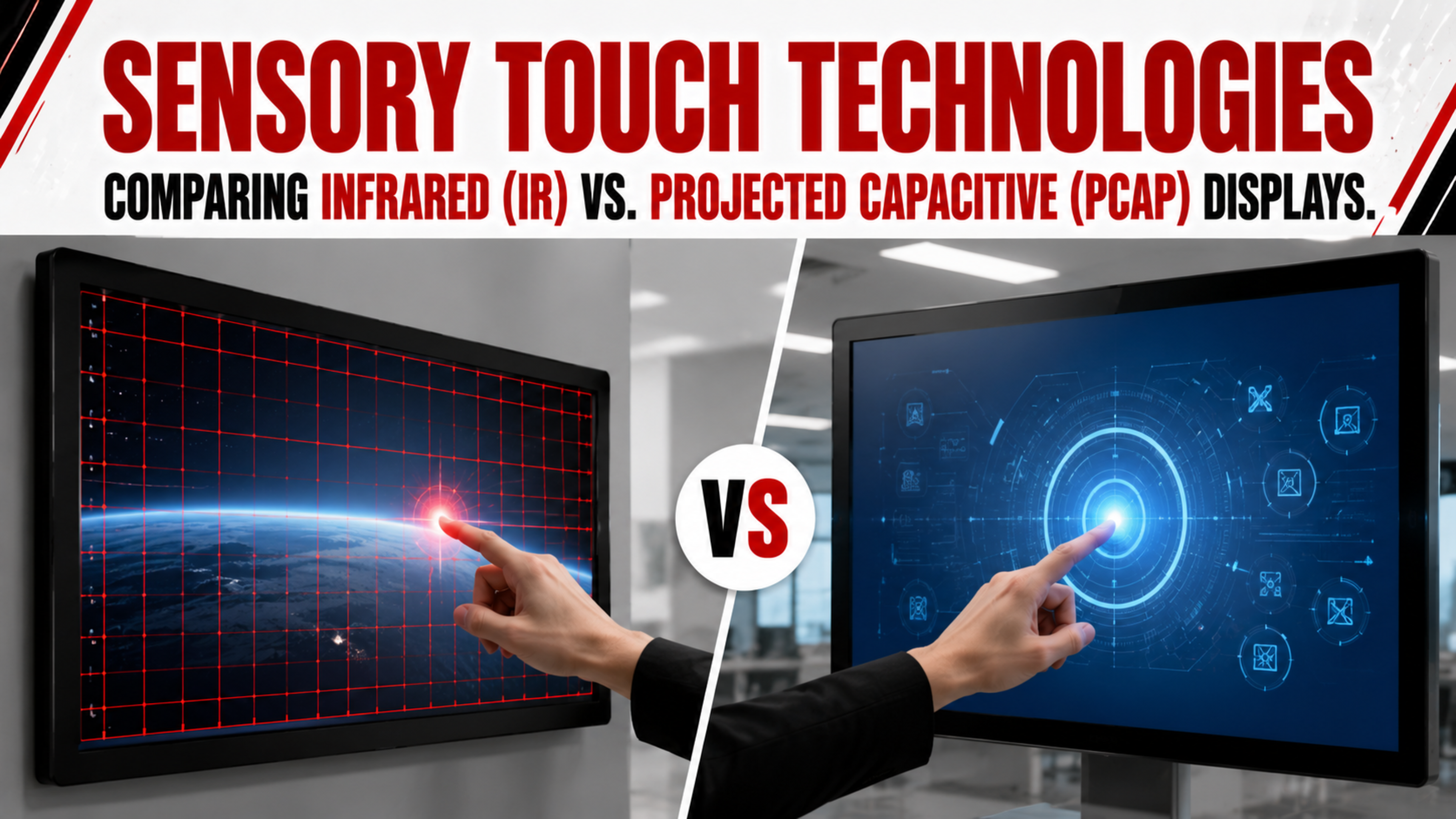
In today's digital-first education and business environment, interactive display panels have become an essential part of classrooms, corporate meeting rooms, training centres, coaching institutes, hospitals, and smart offices. Whether you're looking for an Evota Interactive Panel, MAXHUB Digital Board, LG Interactive Digital Board, or Newline Smart Board, understanding the touch technology behind these displays is critical. The two most widely used touch technologies are: Infrared (IR) Touch Projected Capacitive (PCAP) Touch At GoLive eTechnologies India Private Limited, we help schools, colleges, coaching institutes, enterprises, and government organizations choose the right interactive flat panel display based on their application, budget, and performance requirements.
What is an Infrared (IR) Touch Display? Infrared (IR) technology uses invisible infrared light beams around the edges of the display. When a finger, stylus, or object interrupts these beams, the system accurately detects the touch location. IR technology is widely used in: Products such as the Evota Smart Board, MAXHUB Smart Board, and Newline Interactive Panel commonly use advanced IR touch technology for responsive and reliable performance. Projected Capacitive (PCAP) technology works by sensing changes in an electrostatic field. Similar to modern smartphones and tablets, it provides an exceptionally smooth and highly accurate touch experience. PCAP displays are commonly used in: PCAP technology is ideal where precision and premium user experience are priorities. For schools and coaching institutes, Infrared technology offers several practical advantages: Supports multiple users simultaneously Works with fingers, stylus, gloves, or teaching pointers Excellent for large 65", 75", 86", and 98" displays Lower maintenance cost Ideal for heavy classroom usage This makes products like the Evota Interactive Panel, MAXHUB Digital Board, and Newline Digital Board popular choices for smart classrooms across India. Projected Capacitive displays excel where precision matters. Benefits include: PCAP is commonly selected for: For educational environments, Infrared technology generally provides greater flexibility. Reasons include: GoLive eTechnologies offers several classroom-ready solutions including: These solutions support digital teaching, hybrid learning, online classrooms, and collaborative education. Modern businesses increasingly replace traditional projectors with interactive displays because they offer: Whether you're deploying a Digital Panel Board, Interactive Flat Panel Display, or Interactive Panel Board, GoLive eTechnologies provides end-to-end consultation, installation, and after-sales support. Beyond interactive panels, GoLive eTechnologies supplies complete digital classroom and studio solutions, including: High-quality Evota 4K PTZ Camera, Evota 10X HD PTZ Camera, and professional conferencing cameras enable crystal-clear online teaching and hybrid meetings. Ideal for: GoLive eTechnologies also offers: Before purchasing an interactive display, consider: GoLive eTechnologies provides installation, training, warranty support, and nationwide delivery. When searching online for: GoLive eTechnologies stands out by offering: Whether you are setting up a smart classroom, training centre, conference room, or hybrid learning studio, GoLive eTechnologies helps you select the right interactive solution based on your budget and requirements. Both Infrared (IR) and Projected Capacitive (PCAP) technologies deliver exceptional touch performance, but the right choice depends on your application. For education, training, and large-format collaboration, IR touch displays offer excellent value, durability, and flexibility. For premium commercial environments requiring ultra-precise touch interactions, PCAP displays provide a refined and responsive experience. At GoLive eTechnologies India Private Limited, we offer a wide range of interactive display solutions, including Evota Interactive Panels, MAXHUB Smart Boards, LG Interactive Panels, and Newline Digital Boards, backed by expert consultation, installation, and nationwide support.
What is Projected Capacitive (PCAP) Touch?
Infrared (IR) vs Projected Capacitive (PCAP): Key Differences
Feature
Infrared (IR)
Projected Capacitive (PCAP)
Touch Method
Infrared Light Grid
Electrostatic Sensor
Multi-touch Support
Excellent
Excellent
Stylus Support
Yes
Special Capacitive Stylus
Glove Operation
Yes
Limited
Object Recognition
Yes
Limited
Large Display Support
Excellent
Moderate
Cost
Budget Friendly
Premium
Durability
Very High
High
Classroom Friendly
Excellent
Good
Corporate Use
Excellent
Excellent
Why Most Educational Institutions Prefer IR Displays
Advantages of PCAP Displays
Which Technology is Better for Smart Classrooms?
Why Businesses Choose Interactive Flat Panels
Complete Smart Classroom Solutions from GoLive eTechnologies
Interactive Displays
PTZ Cameras
Teaching Accessories
Choosing the Right Interactive Display
Screen Size
Touch Technology
Resolution
Software Compatibility
Warranty & Support
Why Choose GoLive eTechnologies?
Conclusion
Your email address will not be published. Required fields are marked *
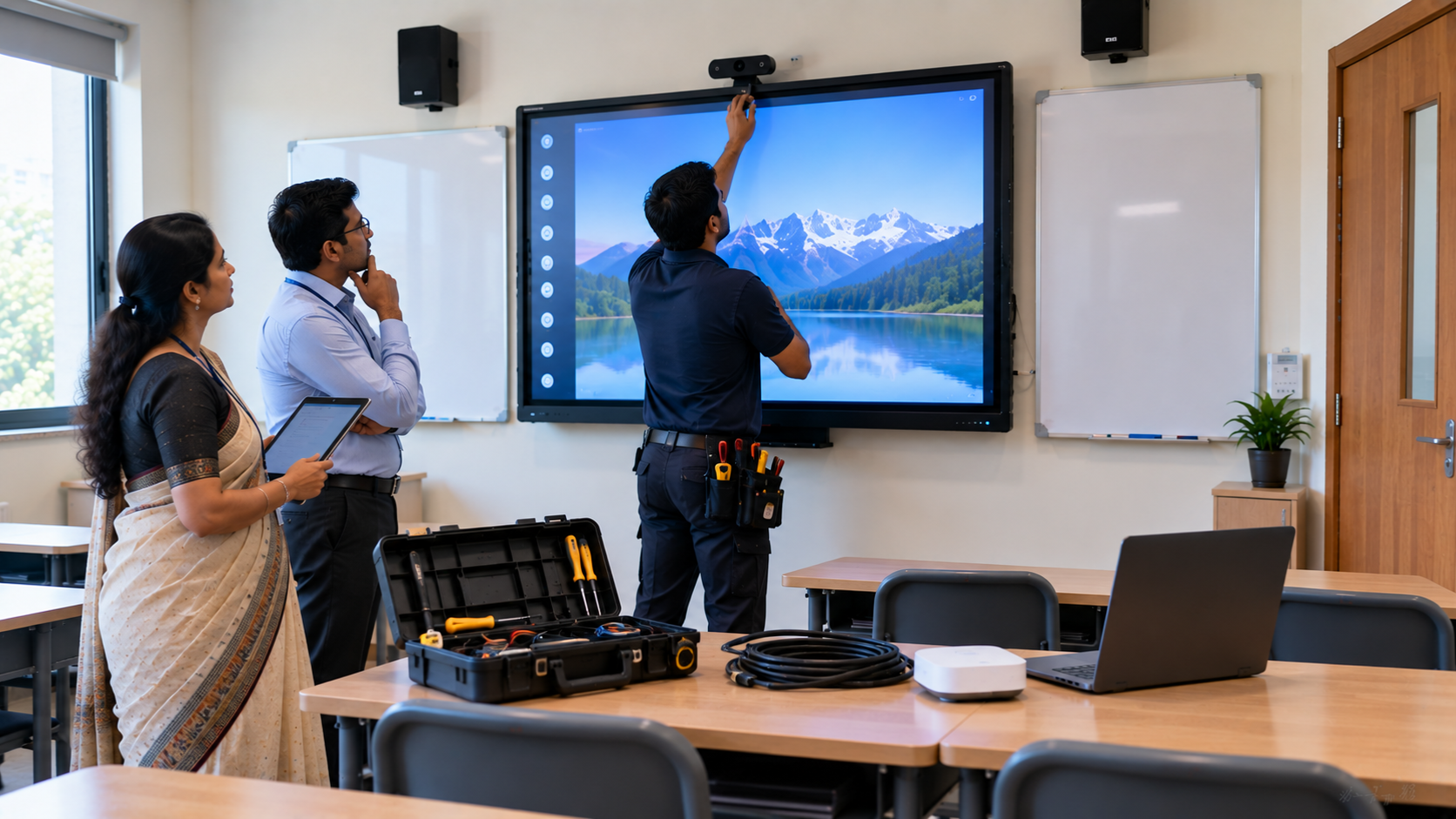
By Inhype • September 12, 2026
A smart classroom is only as effective as the technology supporting it. Interactive panels, smart boards, PTZ cameras, microphones, speakers, PCs and
Read More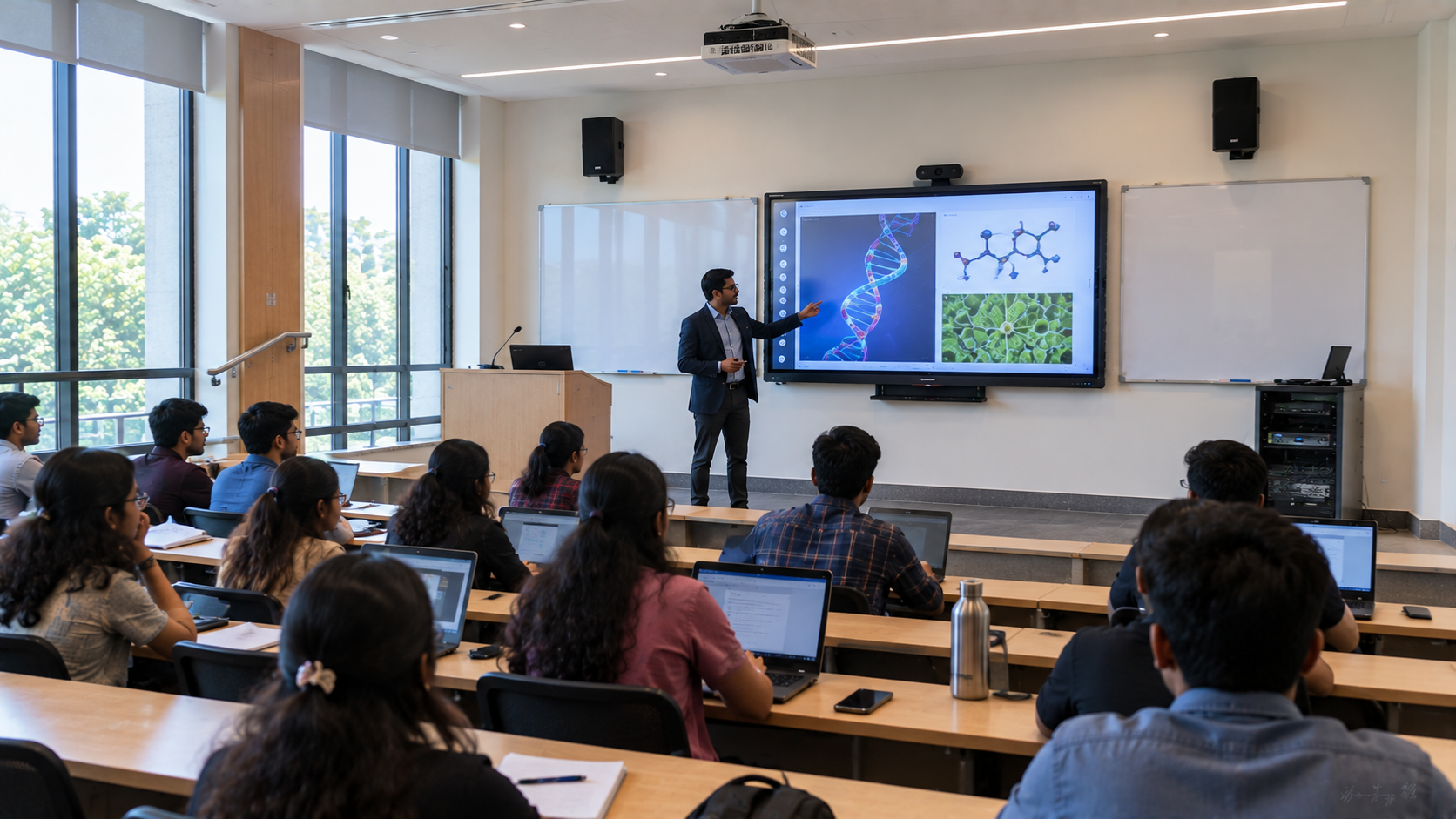
By Inhype • September 12, 2026
Higher education is rapidly moving beyond traditional chalkboards and projectors. Today, colleges and universities need technology that supports inter
Read More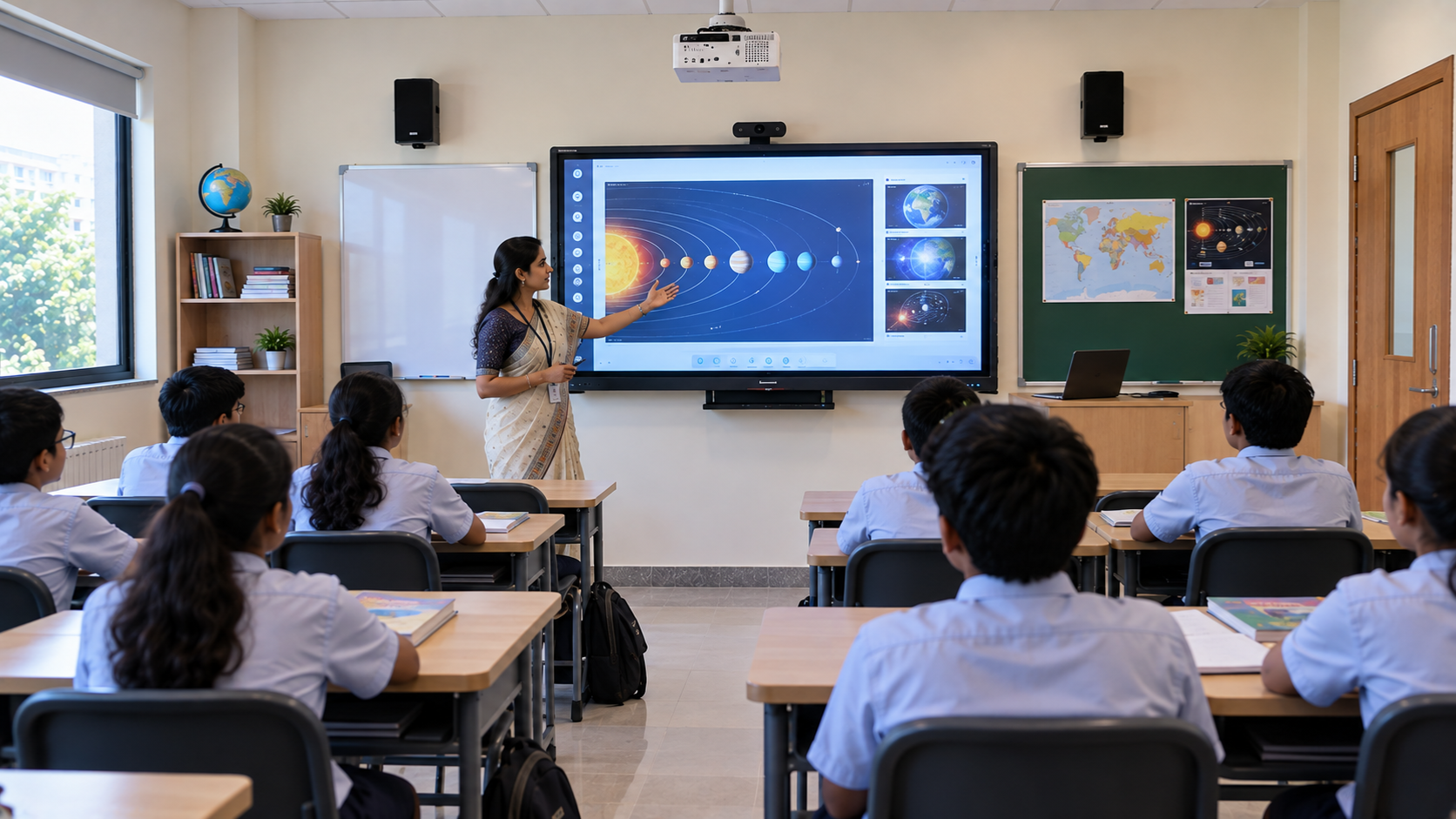
By Inhype • September 12, 2026
A smart classroom for CBSE schools is no longer simply a classroom with a digital board. Modern schools are building connected learning environments t
Read More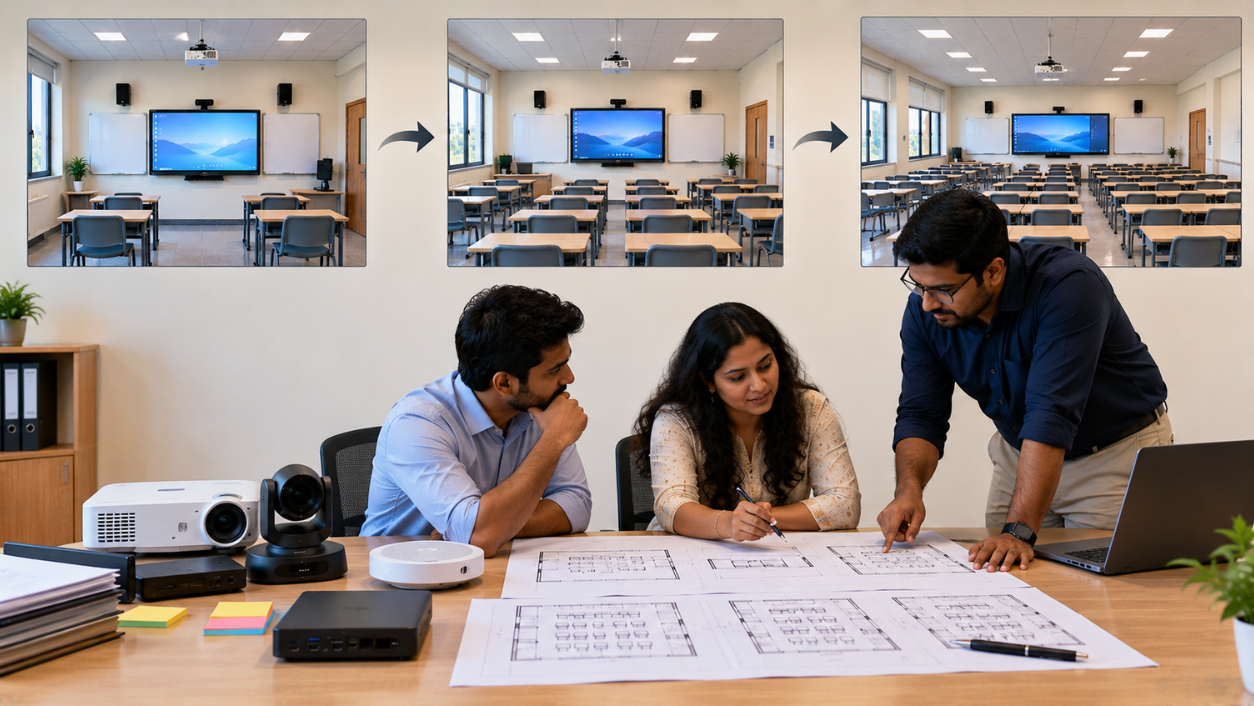
By Inhype • September 12, 2026
Planning a smart classroom project for 10, 20 or even 50 classrooms requires more than simply purchasing digital boards. Schools, colleges, universiti
Read More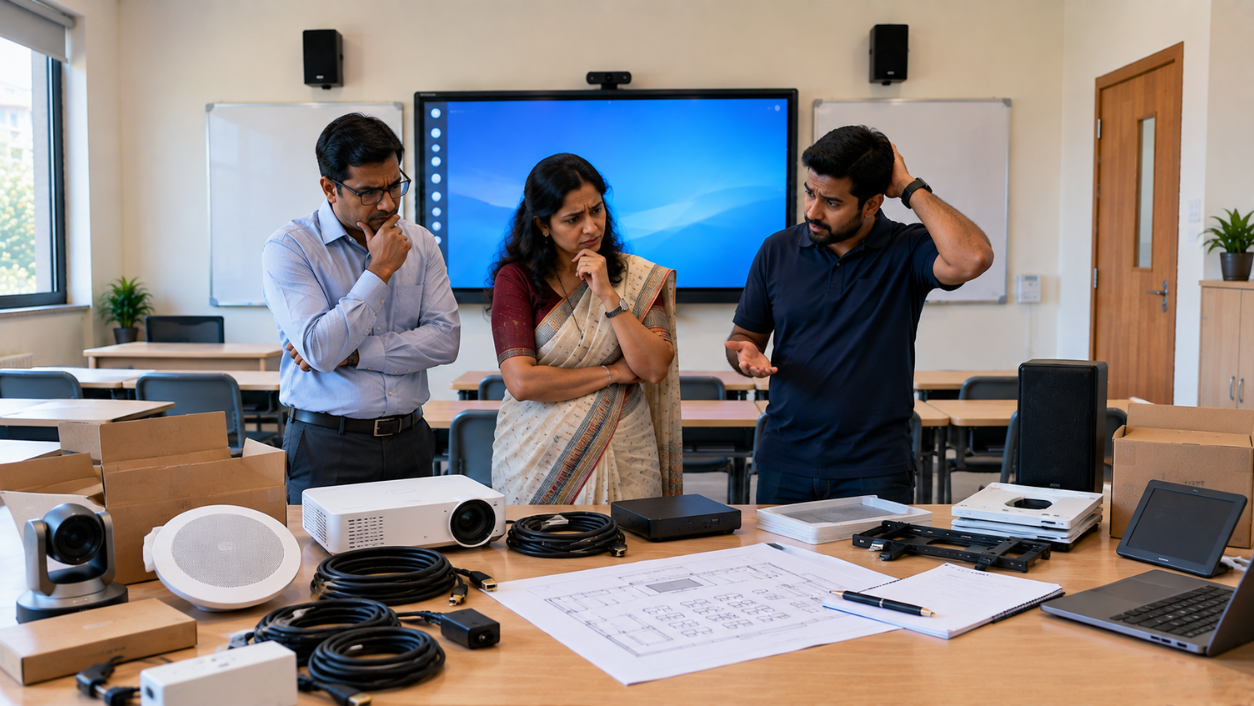
By Inhype • September 12, 2026
A smart classroom can transform the way teachers explain concepts, students interact with lessons, and institutions deliver digital education. From in
Read More



Golive eTechnologies India Private Limited (CIN - U31909UP2021PTC148242) is one of India's leading providers of smart classrooms, interactive boards, video conferencing solutions, and display technologies for the education, healthcare, corporate, and government sectors.
No comments yet. Be the first to comment!